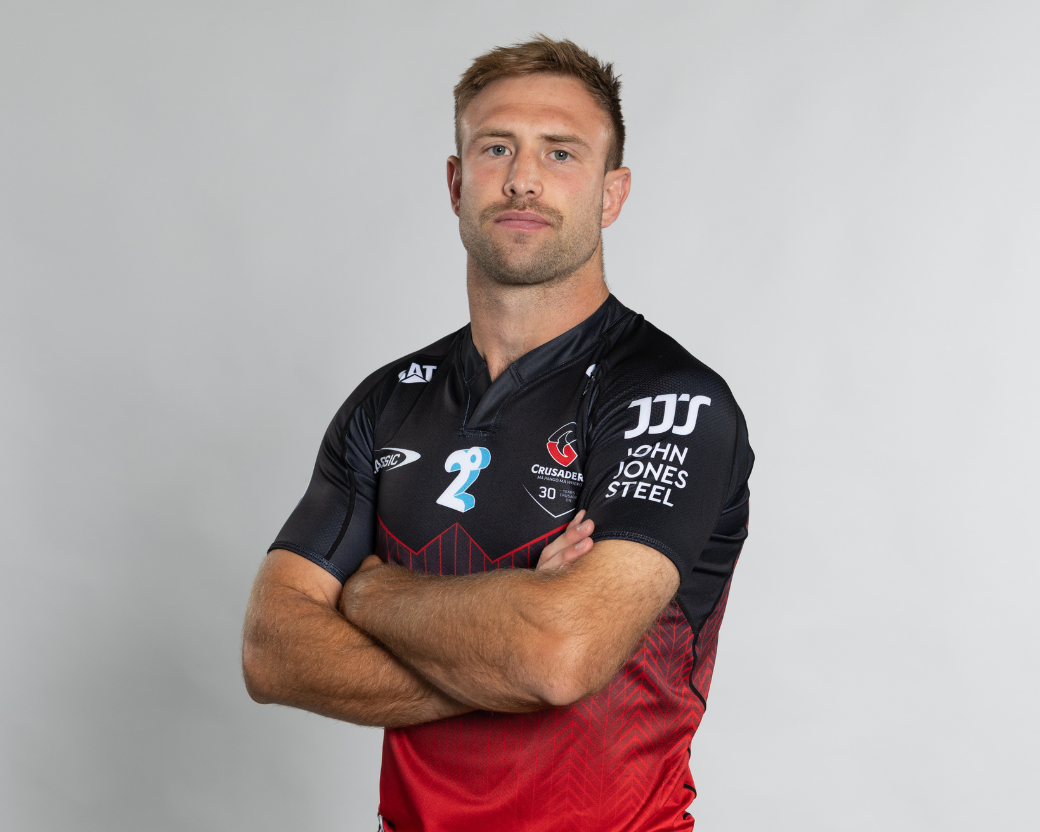
Braydon Ennor remains one of the Crusaders’ most important backline assets, a player whose value is measured not only in attacking moments but in the balance he brings to one of rugby’s most demanding systems. At 186cm and 99kg, Ennor has the physical profile of a modern professional back: strong enough to win collisions, quick enough to threaten in space, and versatile enough to cover multiple roles across the backline. For a Crusaders side that has built its reputation on precision, adaptability and composure under pressure, those qualities make him a significant figure.
Listed simply as a back, Ennor’s game has long been defined by flexibility. That is often one of the most prized traits in elite rugby, particularly in a competition where injuries, tactical shifts and opposition matchups can quickly reshape a team’s plans. Players who can move seamlessly between midfield and wider channels give coaches options, and Ennor has consistently offered that sort of tactical insurance. More than that, he brings the kind of all-court game that fits the Crusaders’ model: direct when required, intelligent in support, and reliable in the detail-heavy parts of back play that often separate winning sides from the rest.
The raw measurements tell part of the story. At 99kg, Ennor has the frame to handle the heavy traffic that comes with midfield and edge defense, while his 186cm height helps him in contact, aerial contests and line-breaking situations. In modern rugby, where backs are expected to combine power with mobility, that blend is increasingly essential. Ennor’s size is not just a statistic; it shapes the way he plays. He can carry hard into contact, absorb pressure, and still generate momentum, an attribute that is particularly valuable for a side looking to establish quick ball and maintain attacking tempo.
That ability to win the gain line is one of his clearest strengths. The Crusaders have historically thrived when their backs can do more than finish moves. Their system asks players to contribute in phase play, to keep attacks alive through sharp running lines and intelligent support, and to make sound decisions under defensive pressure. Ennor’s profile suits that style. He is capable of straightening the attack, holding defenders, and creating space for those around him. Even when he is not the player making the final break, his presence can influence defensive shape and open opportunities elsewhere.
Defensively, Ennor’s value is just as apparent. The Crusaders demand a great deal from their backs without the ball. Defensive reads, line speed, tackle completion and communication are all non-negotiable in a side that prides itself on discipline and structure. Ennor has the physicality to handle one-on-one defensive assignments and the athleticism to recover when play breaks down. That combination matters in high-level rugby, where the ability to shut down space can be as important as the ability to exploit it.
What also distinguishes Ennor is the professionalism implicit in his role. The Crusaders are not a team that carries passengers or rewards inconsistency for long. To remain a relevant figure in that environment requires trust from coaches and teammates alike. It requires a player to understand systems, execute under pressure and deliver week after week in a squad where competition for places is relentless. Ennor’s continued importance speaks to that reliability. He offers a blend of experience and athletic quality that can steady a backline and sharpen it at the same time.
There is also a broader career significance to where Ennor sits within the Crusaders setup. Not every player becomes the headline act, but championship-caliber squads are often built around men who can perform essential roles at a high standard across a long season. Ennor fits that category. His game is not dependent on one singular trait; rather, it is built on a collection of qualities that coaches value deeply. He can carry, defend, cover ground, and adapt to the shape of a contest. In a sport increasingly defined by squad depth and tactical flexibility, that makes him a modern rugby asset.
Current form, in the case of a player like Ennor, is best assessed through influence rather than flash alone. Backs are often judged by tries and highlight-reel moments, but seasoned observers know there is more to the position than finishing. A well-timed hard line, a dominant tackle, a smart support run or a composed defensive read can be just as important to a result. Ennor’s profile suggests a player whose contribution is often embedded in the fabric of a performance. For the Crusaders, that kind of consistency has always been central to sustained success.
His role within the squad also reflects the changing demands of professional rugby. The best teams now require backs who can be complete footballers: physically robust, tactically aware and technically sound. Ennor’s dimensions and positional designation point to exactly that sort of player. He is built for the collisions but equipped for the speed of the game, able to operate in structured patterns while still offering enough instinctive quality to capitalize on broken play.
For the Crusaders, that matters enormously. Their standards are shaped by expectation, and expectation brings pressure. Players in that environment must not only perform but fit a larger identity. Ennor’s strengths align closely with that identity. He brings directness without sacrificing subtlety, strength without losing mobility, and versatility without compromising effectiveness. Those are difficult balances to strike, and they help explain why he remains a player of consequence.
As his career continues, Ennor’s reputation rests on qualities every elite side covets: dependability, physical presence and adaptability. At 186cm and 99kg, he has the tools to impact games in multiple ways. As a Crusaders back, he occupies a role that demands precision and resilience in equal measure. And as a professional, he represents the kind of player championship teams need — not merely talented, but functionally vital.
In a sport that often celebrates the spectacular, Braydon Ennor’s enduring value lies in how completely he serves the contest. He has the size to impose himself, the versatility to solve problems, and the all-round game to strengthen one of rugby’s most exacting teams. For the Crusaders, that makes him far more than a squad option. It makes him a player whose influence continues to matter.