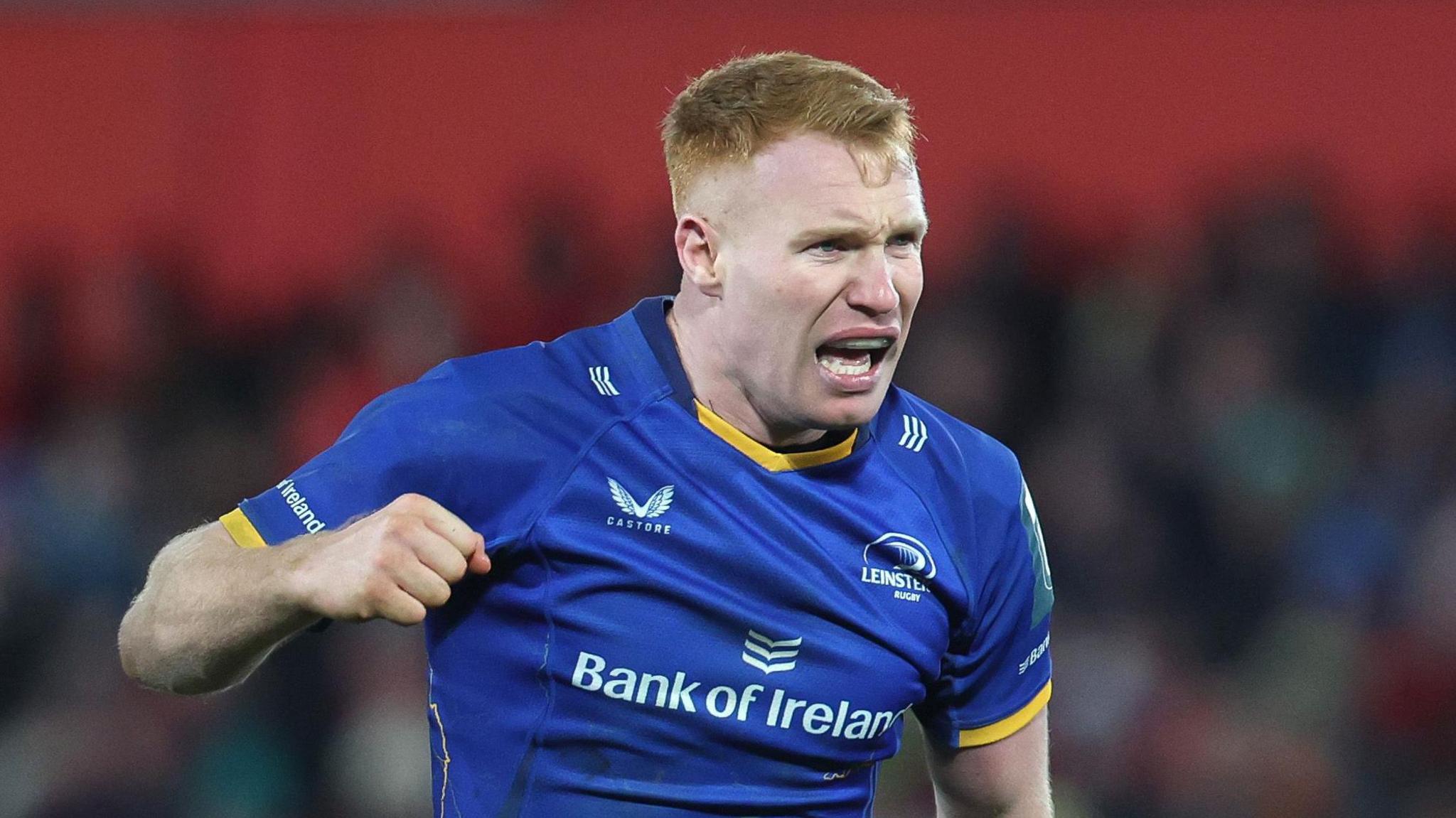
Ciaran Frawley has become an increasingly compelling figure in Irish rugby: a player whose value lies not only in technical quality, but in the breadth of roles he can perform at the highest level. Standing 188cm and weighing 92kg, the Ireland back offers the modern profile coaches covet — athletic enough to threaten the line, composed enough to steer a backline, and adaptable enough to slot into multiple positions when the demands of elite Test rugby shift from week to week.
Wearing the No. 10 jersey in this profile, Frawley is most naturally discussed through the lens of playmaking. Yet to describe him simply as a fly-half would undersell the dimensions of his game. He is a back built for contemporary rugby, where tactical flexibility is no longer a luxury but a necessity. For Ireland, that has made him a useful and increasingly important option within a highly competitive national setup.
Frawley’s physical attributes are notable for a player tasked with making decisions under pressure. At 188cm, he brings height and presence to the backfield, while his 92kg frame allows him to cope with the defensive demands that come with Test rugby. That combination gives him a robustness that separates him from more lightweight distributors. He is capable of absorbing contact, standing up physically in the defensive line, and carrying with enough authority to ask questions of defenders rather than merely moving the ball on.
That matters in the modern game because the fly-half role has evolved. It is no longer enough to pass crisply and kick accurately. International rugby increasingly demands a No. 10 who can defend in traffic, challenge the gain line, and vary tempo depending on the phase of play. Frawley’s appeal is that he can do those jobs while also offering the wider skill set of a back comfortable across the line. His versatility gives Ireland options in selection and in-game management, and that is often one of the clearest indicators of a player trusted by elite coaching staff.
Technically, one of Frawley’s greatest strengths is his composure. He does not present as a frantic playmaker. Instead, he tends to operate with a measured rhythm, assessing space and pressure before committing to the right choice. That calmness is valuable in an Ireland side whose attacking shape relies on precision, timing, and the ability to keep phase play flowing. A back who can maintain structure without becoming predictable is a significant asset, and Frawley’s game has increasingly reflected that balance.
His distribution is a central part of that profile. When operating as a first receiver, he has the skill to move the point of attack and bring runners onto the ball with timing. That allows Ireland to play with width without sacrificing control. Just as importantly, he has the running threat to keep defenders honest. Opponents cannot simply drift off him and focus on the next man because Frawley is capable of stepping into the line himself, carrying into space, and forcing defensive adjustments.
That dual threat — pass or carry — is often what separates useful backs from genuine international options. Frawley’s running game may not always be the loudest element of his profile, but it is one of the most important. He has the size to ride contact and the athleticism to attack seams in the defensive line, which means he can create momentum even when the obvious passing lane is closed. For a team like Ireland, whose attack is built on generating quick ball and stressing defensive systems over multiple phases, that quality has clear tactical value.
Then there is his kicking game, another essential component for any player in the No. 10 channel. At international level, territory remains a decisive currency, and backs who can turn pressure into field position are indispensable. Frawley’s kicking contributes to that broader strategic battle. Whether helping manage exits, contesting space, or adding variety to attacking sequences, his ability to strike the ball cleanly strengthens his case as a trusted option in the backline. Even beyond set-piece or structured phases, the presence of a composed tactical kicker can alter how opponents defend.
Defensively, Frawley offers more than many conventional playmakers. His size helps, but so does his willingness to engage physically. Ireland demand work-rate and reliability across the field, and backs who become targets are difficult to carry in Test rugby. Frawley’s sturdiness and positional awareness help ensure he can hold his own, which in turn gives coaches greater freedom in how they configure the rest of the backline. A player who can be trusted defensively is often one who earns opportunities in big matches.
What makes his career trajectory particularly interesting is the context in which he is operating. Ireland have built one of the most sophisticated and competitive systems in world rugby, and breaking through in that environment requires more than promise. It requires consistency, tactical intelligence, and the ability to fit seamlessly into a collective identity. Frawley’s continued presence in that conversation speaks to the regard in which he is held. He is not merely a squad option filling space; he is the kind of player modern international teams need over the course of a demanding season.
There is also a broader sense that Frawley represents the value of adaptability in elite rugby. Injuries, tactical shifts, and opposition-specific plans mean that players capable of covering multiple responsibilities are often central to long-term success. For Ireland, that makes him a practical asset and a strategic one. He can help solve selection puzzles, offer in-game flexibility, and maintain the technical standards required in pressure moments.
At 188cm and 92kg, with the skill set of a playmaker and the resilience of a back comfortable in contact, Frawley fits the template of the modern Irish international. His current standing is built on more than potential alone. It rests on a rounded game: distribution, tactical kicking, defensive commitment, and the composure to operate in one of rugby’s most demanding roles. As his career continues to develop, those qualities should keep him firmly in Ireland’s thinking.
For now, Frawley’s profile is that of a player moving with purpose rather than noise. He may not always be the most headline-grabbing name in Irish rugby, but he is increasingly difficult to overlook. In a sport that prizes precision, versatility, and trust, Ciaran Frawley has fashioned a reputation that feels both timely and sustainable — the mark of a back whose best chapters may still lie ahead.