Codie Taylor scored two tries in the All Blacks' 50-19 win over the Bulls at Loftus Versfeld on Saturday. Two days on, it is the first of them that people are still arguing about — and the argument is not about whether it was legal.
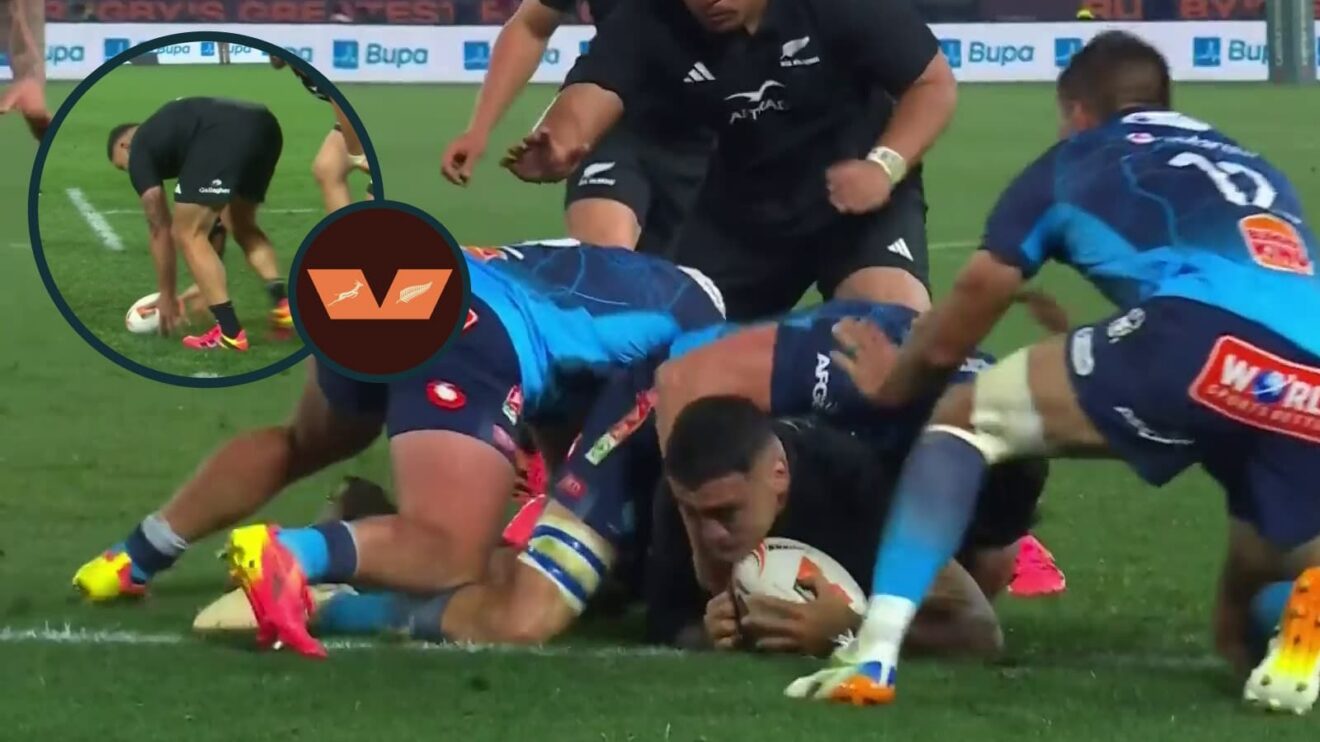
The passage came in the 29th minute, with the Bulls down to 14 men after tighthead Francois Klopper was yellow-carded. Taylor, captaining New Zealand for the first half on his return from injury, took the penalty as a scrum and forced the Bulls into a front-row change. The All Blacks won the scrum battle and another penalty. This time Taylor did not go back to the set-piece.
He placed the ball, dummied a tap, and the Bulls defence bought it. Juann Else and JF van Heerden shot up out of the line. As they and their team-mates began to retreat back onside, Taylor tapped for real and drove for the line, forcing his way over despite Van Heerden's tackle.
The Bulls protested. Referee Nika Amashukeli was not moved.
"He can do that, I promise you," the Georgian told them.
He was right. Nothing in the World Rugby lawbook explicitly prevents a player from dummying a tap. The one place where deception of that kind is outlawed is at the back of a ruck, under Law 15.16 (g): "Players must not: Take any action to make opponents believe that the ruck has ended when it has not." No equivalent clause covers quick taps.
Planet Rugby's Jared Wright, who took the incident apart in a laws breakdown on Monday, accepted the decision was technically correct but argued Amashukeli had a better option available than simply waving play on. Wright pointed to Law 9.27 — "A player must not do anything that is against the spirit of good sportsmanship. Sanction: Penalty" — while conceding a penalty against Taylor would have been heavy-handed. His preferred solution was for Amashukeli to have blown the whistle, let the Bulls reset, told Taylor he could not do that, and ordered the penalty retaken. That, Wright suggested, would have shown a feel for the game and the occasion, and killed the controversy on the spot.

The wider reaction split along similar lines: clever, or cynical. RugbyPass rated Taylor 8.5 out of 10 for the match and framed the moment purely as a captain's decision — Taylor "opted for the quick tap in the 32nd minute, powering over to extend the lead to 17". Writing for Daily Maverick, Craig Ray described the score plainly as coming "from a quick tap-and-go where he brushed off defenders with ease", and reserved his praise for a hooker who "looked like he'd never been away" in his first match of the tour.
Amashukeli's afternoon had a second flashpoint, and this one he arguably got more right. Bulls lock Ruan Vermaak hammered into the New Zealand defence and appeared to be held short before reaching out to ground the ball. Amashukeli gave the try. His TMO, France's Eric Gauzins, wanted it gone.
"The ball is grounded short, and then it's a knock-on," Gauzins told him.
Assistant referee Karl Dickson was less certain: "It's either a try or it's short."
Amashukeli backed his own eyes.
"With the angle I've seen, the on-field decision is a try. I don't think that the angles we've seen provide clear evidence to overturn this try — so my decision is try."
Former Springboks flanker Schalk Burger, on SuperSport commentary, felt the referee was entitled to stand firm, saying "nobody was in a better position to make this call".
Neither incident changed the result. The All Blacks were 24-0 up at the break and finished with eight tries to three, a third win in eight days after seeing off the Stormers 38-21 and the Sharks 54-0. But Amashukeli is refereeing in a tour that has already produced grumbling from New Zealand about officials being overly pedantic, and both calls will be re-examined before Ellis Park on Saturday.
The lawbook says Taylor did nothing wrong. That is not quite the same as saying it looked right.