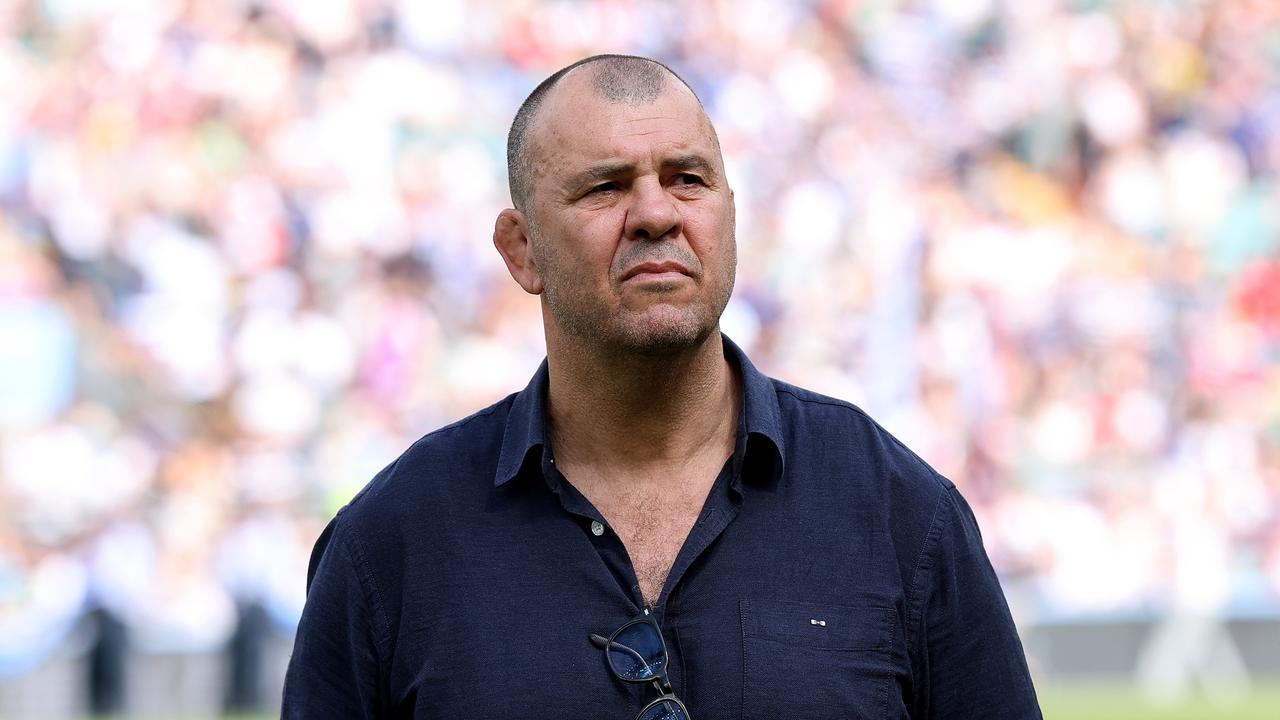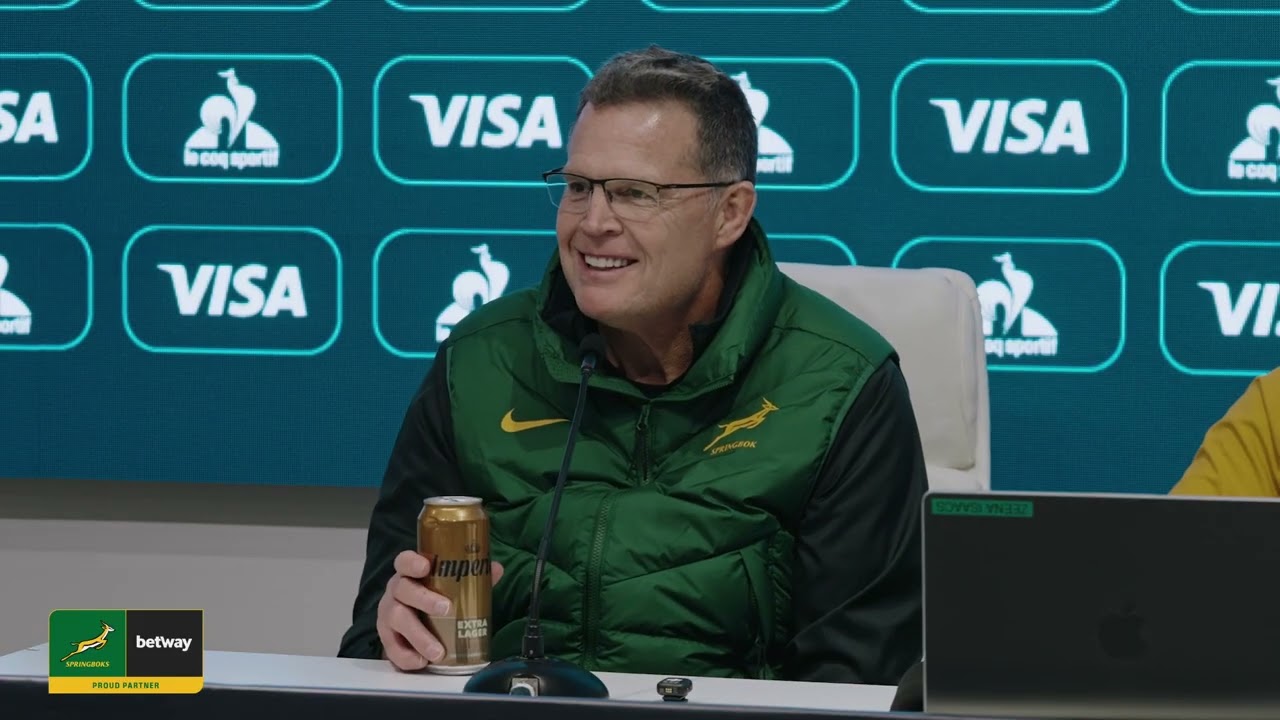
Rassie Erasmus was offered a meeting with the officials for Saturday's Rugby's Greatest Rivalry opener at Ellis Park. He said no. So did Dave Rennie. The reason both declined says more about a rule change at World Rugby than about either coach.
Coaches used to be able to sit down with a match-day refereeing team on their own before a Test — partly to seek clarity on law interpretations, partly to flag a tactic they intended to use. Erasmus did exactly that when the Springboks unveiled their midfield mauls last year. Under the current arrangement, both head coaches must be present for any such meeting, which removes the element of surprise entirely.
"There's definitely frustration among the coaches that you can't have meetings with the referee if both teams don't agree, and it's now at a stage where you almost accept that both teams' coaches aren't always going to agree to a pre-match meeting," Erasmus said.

He then explained why he turned this one down. "I myself this week said no we don't need one because it doesn't help now, after they played four games, and now we wanted to sort out things in three training sessions."
The practical loss, as Erasmus described it, is the small tactical heads-up that used to keep referees from being caught cold. "Sometimes there are small things which you'd normally alert referees in meetings and say, 'Listen, we might do a midfield maul; just be aware of that and know the law'," he said. "Now you can't because you have to have the meeting with the other coach; you can't say, 'We might do a front peel in the lineout, maybe don't stand there when we do the front peel because you might not see if it's obstruction or not'."
Rennie's account from the New Zealand camp matched it almost exactly, and he was untroubled by the outcome.
"For us to do that, we both have to agree," the All Blacks coach said. "They sent out an email last week just to have a chat around maybe four key areas, and one of them was around the time wasting. Rassie didn't feel there was any need to meet. I feel the same way to be honest. We've had conversations via email, and we've got a summary sent to us this morning. So we're pretty clear."

That reference to time wasting is the live argument of this tour. New Zealand have made speeding the game up an explicit goal, and the accompanying suggestion — pushed hard by parts of the New Zealand and Australian media rather than by Rennie himself — is that South African sides slow it down. Erasmus's view is that the removal of the referee meetings is precisely why that debate is now being conducted through press conferences.
"So, I think teeing up the referees with things you want to do is very difficult, and I totally understand why the All Blacks voice some of their concerns," he said. "If they genuinely believe we slow down the game, they can't say it's a meeting with us being present and we are arguing with them."
He went further, describing a structural distance between coaches and officials that did not previously exist. "I think there's definitely a gap now between coaches, scrum coaches, and referees, and small tactical things — then you voice your opinion in the media. That's the only option."
Erasmus brought former Test referee Jaco Peyper, now SA Rugby's laws advisor, to the press conference specifically to answer the charge. "My opinion is New Zealand has played four matches, and there's certainly been a narrative out there which I think is very technical around the speed of the game, the slowing down of the game, and Jaco is better able to answer those questions because he helps us with all those technical things around laws and so on," the head coach said.
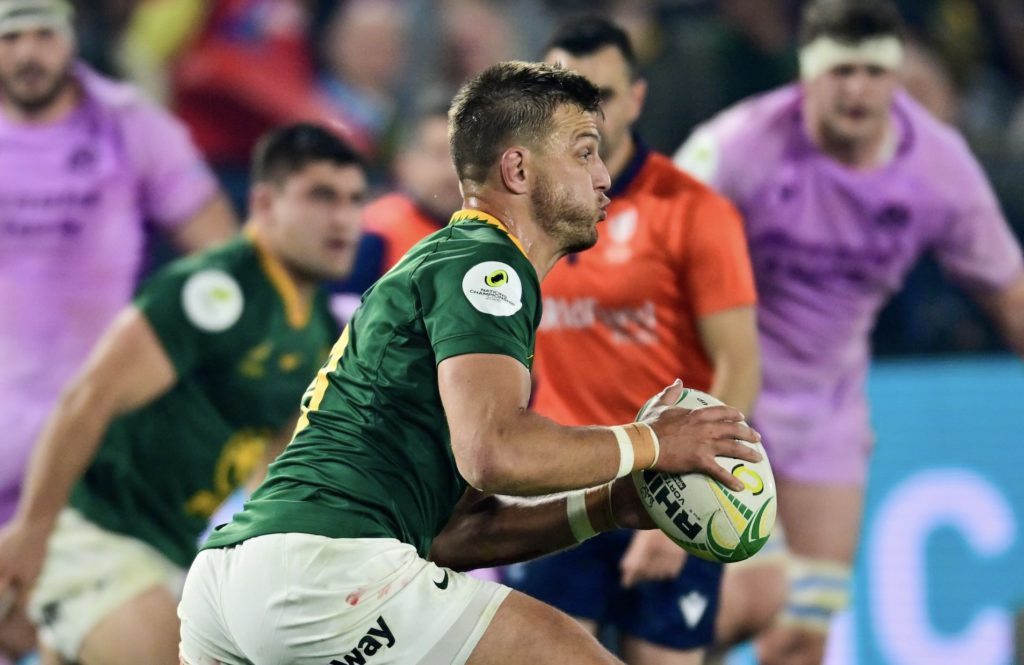
Peyper's rebuttal was that the feedback loop simply does not support it. "I think the main thing is that over the five games that we've played, we've not had one piece of feedback that we slow down the game," he said. "Maybe New Zealand have played against teams who are in pre-season mode. It's like playing those Super Rugby warm-ups in January; maybe there's something there, but I mean we certainly haven't got negative feedback around it."
Former Springboks captain Jean de Villiers accepts half the argument and rejects the other half. Speaking on Boks Unpacked, he agreed the game needs to move quicker.
"I agree with the point that we need to speed up the game, we can't have such long breaks in play," de Villiers said. "Whether that is the production team getting it quickly in place or whether it's the decision-making of the officials, we need to be better at that because we do have too many breaks."
What he disputes is the conclusion New Zealanders have drawn from it. "I know from New Zealand, everyone is saying: 'New Zealand will speed up the game and South Africa won't be able to deal with the pace of the game'," he said. "I think you're going to get a surprise if you think you're going to outrun and outplay the Springboks."
Fellow former Bok centre Robbie Fleck was blunter, suggesting the stereotype is a decade out of date: "10 years ago maybe that's true."
De Villiers also pushed back on the consistency complaint that tends to follow every Test in this fixture, arguing that variation between officials is a feature to be adapted to rather than a scandal.
"The reality is every single referee, whether it's northern hemisphere or southern hemisphere. You take northern hemisphere referees, Carley is different to Dickson, who is different to whoever," he said. "I've made peace with the fact every referee approaches it in a different way and I think it's two areas — one is the scrum and then ruck time."
Englishman Matthew Carley has the whistle at Ellis Park on 22 August, with Karl Dickson and Nika Amashukeli on the touchlines. Neither coach will have spoken to him face to face beforehand.