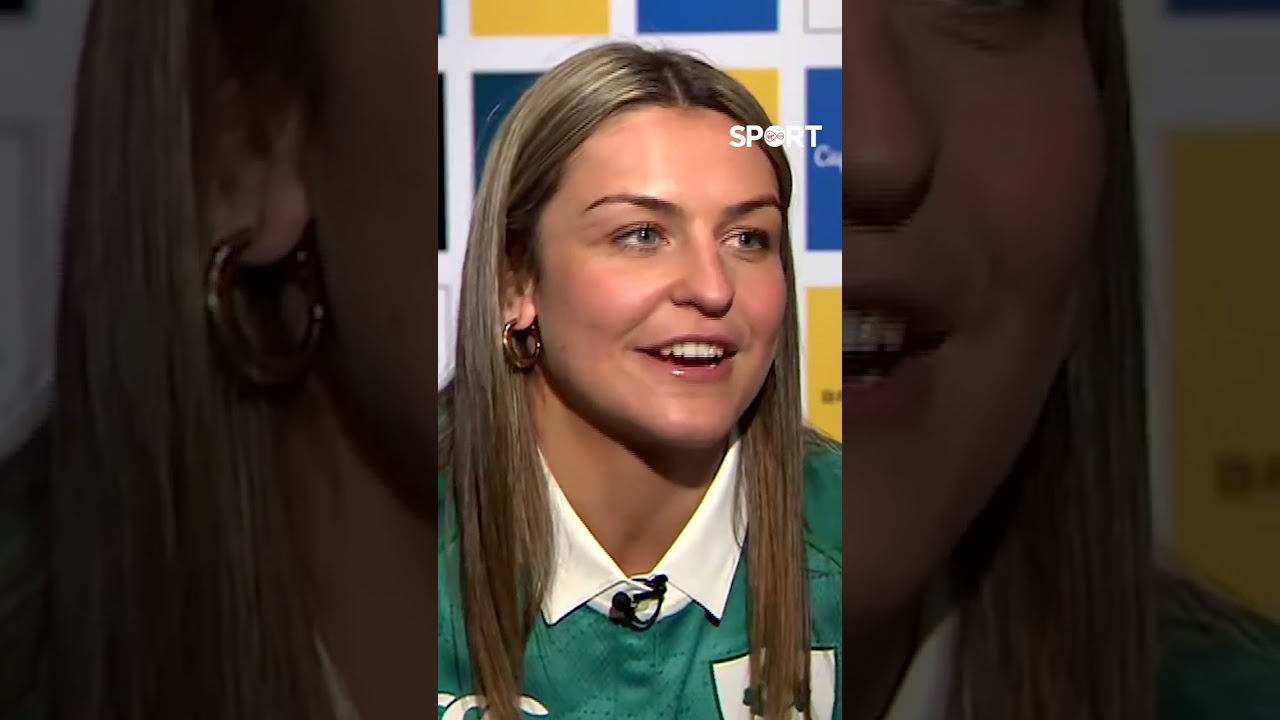
Erin King has had what she calls "a pinch me" year — an Ireland Women's captaincy, a place at the centre of Scott Bemand's Women's Six Nations plans, and, along the way, the kind of injury enforced pause that has made her slow down and look at the road behind her.
Speaking to Virgin Media Sport ahead of the tournament, the back-rower and former sevens international began by describing the sensation that most young captains only talk about later in their careers — the feeling that everything is moving too fast to process in the moment.
"Sometimes everything's moving so quick," King said. "You kind of — you don't really know. You can't really have a minute to think about it. But I think the past year, with my injury, I've really got to reflect and get a new perspective on everything."
That reflection has produced a captain whose public language is conspicuously un-individual. Asked how it felt when Bemand — Ireland's head coach and the architect of the current women's rebuild — asked her to lead, King's answer turned straight back to the people who got her there.
"I'm really grateful. And when Scott asked me to be captain, I definitely took a moment and thought about everyone who was kind of impacted my career," King said. "It's been a great journey."
It has also been an unusually structured one. Where many Ireland internationals come through province and Under-20s, King's route ran through Naas RFC and then through Ireland's sevens programme before returning to fifteens — a pathway that is increasingly being treated in women's rugby as a legitimate accelerator for Test-ready players rather than a detour.
"Starting with Naas, all them coaches who brought me up, until I got my sevens contract, and then them years in sevens, I'm really grateful for," King said. "Because I learned so much, and you know, got so much experience on the international stage."
The sevens argument, in particular, is an unusually important one for Ireland's women's programme. The short-form game gives young players dozens of international exposures in a condensed window — the kind of high-pressure reps that the fifteens calendar cannot produce — and King is one of a handful of Ireland internationals whose development has been visibly shortened by those tours.
Asked to sum up what she wanted people outside the squad to know, King returned — for a third time in the interview — to the people around her.
"So everyone who's helped me in my career, I'm so grateful for them," King said. "I wouldn't be here without..."
For Bemand and Ireland, the interview is a useful signal of what the captaincy is going to sound like under King — low on personal claim, heavy on credit, and focused on a team that is deliberately being rebuilt from the pathways up. For a Six Nations in which Ireland's senior women have been asked to close a visible gap on England and France, that is a captaincy tone that matches the project.
The more private answer — the one about injury and perspective — is arguably the more interesting for anyone who has watched King rise. She has not spent this year only talking about leadership in the abstract. She has spent it, by her own admission, doing the thing sevens and fifteens rugby rarely allow: stopping, and looking back.
That, by itself, is a rare luxury for a captain stepping into a Women's Six Nations campaign, and one King clearly intends to use.