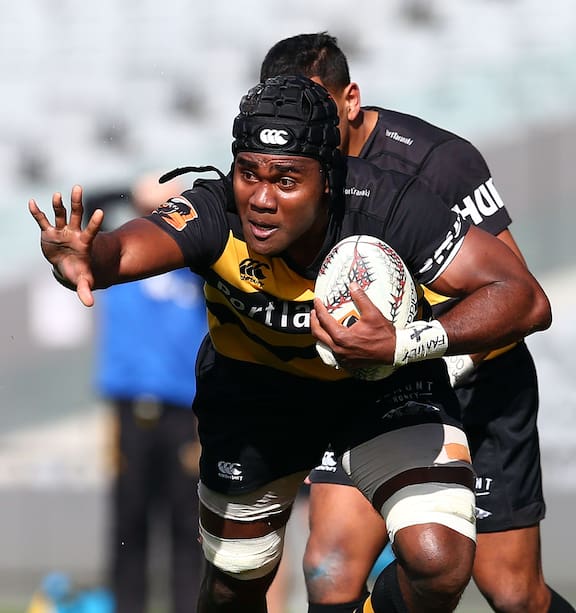
Gus Sowakula cuts an imposing figure even by the standards of elite professional rugby. At 196cm and 117kg, the ASM Clermont Auvergne flanker has the physical profile to dominate collisions, but his value goes beyond size alone. In a league and a sport increasingly defined by the need for back-row forwards to combine brute force with mobility, Sowakula offers the kind of all-court presence that modern coaches covet.
For Clermont, a club with a long tradition of demanding, high-tempo forward play, Sowakula’s role is a significant one. Operating at flanker, he is tasked with balancing several of the game’s most taxing responsibilities: winning collisions, slowing or stealing opposition ball, carrying effectively in traffic, and providing defensive authority across multiple phases. It is a position that requires relentless work rate and tactical intelligence as much as raw athleticism, and Sowakula’s profile suggests a player built for that challenge.
At 117kg, he has the mass to be a genuine gain-line carrier. That matters in the modern game, where front-foot ball is often the difference between a side merely retaining possession and one that is able to apply sustained pressure. A flanker of Sowakula’s dimensions can alter defensive plans simply by being present. Opponents must commit tacklers to stop his momentum, and that in turn can create space elsewhere for Clermont’s attacking structure to exploit. In close quarters, particularly around the fringes of the ruck, that kind of carrying power is invaluable.
Yet height and weight only tell part of the story. At 196cm, Sowakula also brings a rangy, disruptive quality to the back row. Taller flankers can offer a unique defensive reach, making them difficult to evade in contact and useful in contesting loose ball. Their frame can also be an asset around the lineout environment, whether as a primary option, a support lifter, or a spoiler against opposition possession. For a side navigating the physical demands of top-level domestic and European competition, versatility in the back five of the scrum is essential, and Sowakula appears to fit that requirement naturally.
His position at flanker places him at the heart of the contest. Unlike specialists whose influence is concentrated in one phase, flankers are expected to impact everything. They are among the first players into the tackle area, often the first defenders back on their feet, and regularly the forwards asked to link play between tight exchanges and wider attacking channels. It is one of rugby’s most unforgiving jobs, requiring repeated high-intensity efforts with little margin for error. Sowakula’s physical tools suggest he is well equipped to handle those demands, particularly in the confrontational exchanges that define matches between heavyweight sides.
Clermont have historically thrived when their forward pack has provided both bite and mobility, and Sowakula’s presence aligns with that identity. A powerful flanker can set the emotional tone of a game. Big carries lift teammates and force defenders backward. Dominant tackles energize a crowd and shift momentum. Strong breakdown work can suffocate an opponent’s rhythm. These are the moments in which a back-row player stamps authority on a contest, and they are often the moments coaches value most highly because they influence not just territory and possession, but belief.
There is also a strategic importance to a player of Sowakula’s profile. Rugby’s tactical evolution has made the back row one of the sport’s most scrutinized areas. Coaches now demand hybrid skill sets: the carrying force of a traditional forward, the defensive mobility to cover space, and the technical sharpness to survive at the breakdown under intense officiating scrutiny. A 196cm, 117kg flanker who can consistently meet those requirements gives a side flexibility in selection and structure. He can be used to target specific opposition weaknesses, add ballast against physical packs, or support a game plan built on territorial pressure and set-piece control.
For Clermont, that flexibility is particularly valuable over the course of a long campaign. Squad depth and role clarity often determine whether teams can sustain form across domestic and continental fixtures. Sowakula’s ability to offer size, carrying threat and defensive presence from the flank makes him a useful piece in that broader puzzle. He is the kind of forward who can help a team manage the attritional middle portion of a season, when matches are won less by flair than by accuracy, discipline and repeated physical commitment.
The demands on a flanker also extend into leadership by action. Even without a jersey number specified here, the expectations of the role are clear: be visible, be durable, and be influential in the moments that matter most. Clermont supporters know the value of industrious back-row play, and players in Sowakula’s mould tend to earn appreciation not only for the obvious contributions — the carries and tackles — but for the unseen work that underpins a team’s performance. Cleaning rucks, folding quickly in defense, pressuring the breakdown and maintaining line speed are not always glamorous tasks, but they are central to winning rugby.
What stands out most about Sowakula’s profile is how naturally it suits the modern demands of Top 14 rugby. The French game is unforgiving, intensely physical and tactically varied. Week after week, forwards are asked to adapt to different styles, from direct, set-piece-driven contests to faster, more expansive encounters. A flanker with Sowakula’s dimensions has the potential to be a stabilizing force in either environment. He can match power with power, but he also has the frame and positional relevance to influence the wider patterns of a match.
As Clermont continue to shape their ambitions, players like Gus Sowakula remain central to the equation. He brings scale, strength and practical utility to one of rugby’s most demanding positions. In a sport where the smallest details often decide the biggest games, the value of a physically commanding, tactically important flanker cannot be overstated. For ASM Clermont Auvergne, Sowakula represents exactly the kind of forward presence around which serious performances are built.