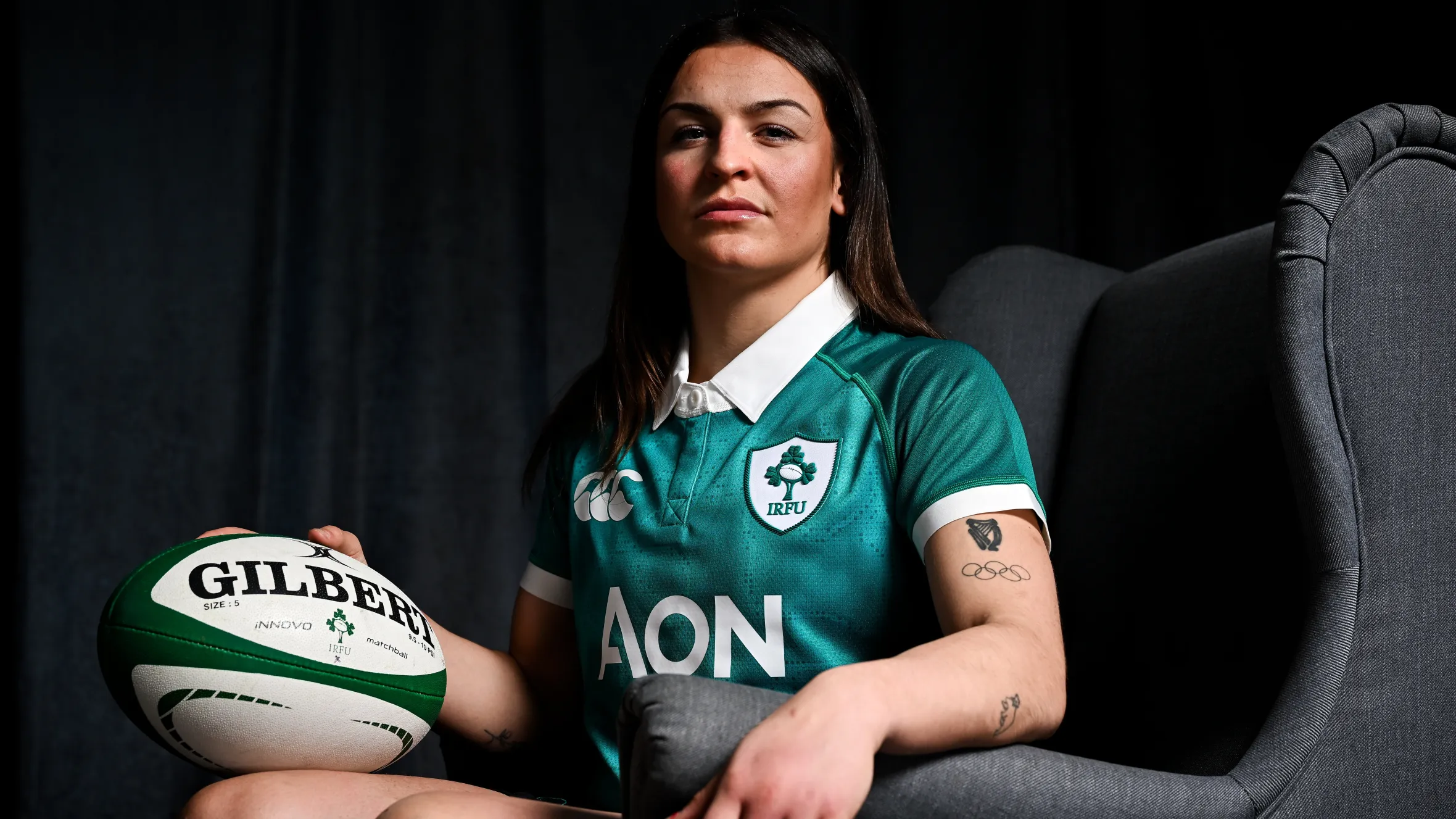
It is the sort of trajectory that even the player living it can struggle to make sense of. Five years ago, Erin King was a sevens prospect taking her first international steps with the Ireland programme. This week, she leads the Ireland Women into a Six Nations campaign as Scott Bemand's appointed captain. Asked how she had processed the rise, King admitted she barely had.
"Definitely. I think sometimes everything's moving so quick. You kind of don't really know - you can't really have a minute to think about it," King said. "But I think the past year, with my injury, you've really got to reflect and get a new perspective on everything."
That injury - the kind of forced pause that ends careers as often as it reframes them - turned out to be the moment King got the news that the captaincy was hers. She said the conversation with Bemand stopped her in her tracks.
"So no, I'm really grateful. And when Scott asked me to be captain, I definitely took a moment and thought about everyone who was kind of impacted my career," she said. "It's been a great journey."
That journey has been unusually broad for a player still in her mid-twenties. Long before she was a Six Nations XV captain, King was learning the international game on the sevens circuit, the World Series tournaments that take young players from city to city in a brutal apprenticeship of contact, recovery and travel. King credits those years as the reason she has been ready when XV-a-side has come calling.
"Obviously, like you said, starting with Nace, all them coaches who brought me up until I got my sevens contract and then them years in sevens, I'm really grateful for because I learned so much," King said. "You know, got so much experience on the international stage."
The pathway King describes - sevens as a feeder for international XVs - is one Ireland Women have leaned on more than most unions. Successive head coaches have used the sevens programme as a finishing school, and a string of Ireland's current XVs starters earned their first international jerseys in the seven-a-side game. That King has now been handed the captaincy of the XVs side is, in its own way, a vindication of the strategy.
She is not pretending it has been a solo project. Asked about the people who shaped her path, King kept returning to a theme: gratitude.
"Everyone who's helped me in my career, I'm so grateful for them and I wouldn't be here without [them]," King said.
Bemand's choice will be tested early. Ireland's Women's Six Nations campaign carries weight beyond the championship itself - the team is building toward a World Cup cycle, and the captaincy is the kind of decision that defines a coach as much as a player. Bemand has chosen youth, energy and a player whose CV reads as a mix of sevens speed and XVs leadership. King's own framing of the appointment - one of acknowledgement and humility rather than ambition or expectation - is the sort of tone Ireland's coaching staff will likely have wanted from a first public outing in the role.
What she does on the field over the next eight weeks will of course be the only thing that ultimately matters. But Ireland's new captain has at least started in the right register: aware of where she has come from, aware of who got her there, and aware that her appointment is something to be acknowledged rather than assumed.
For a player whose career has been moving too fast to think about, taking a moment is no small thing.