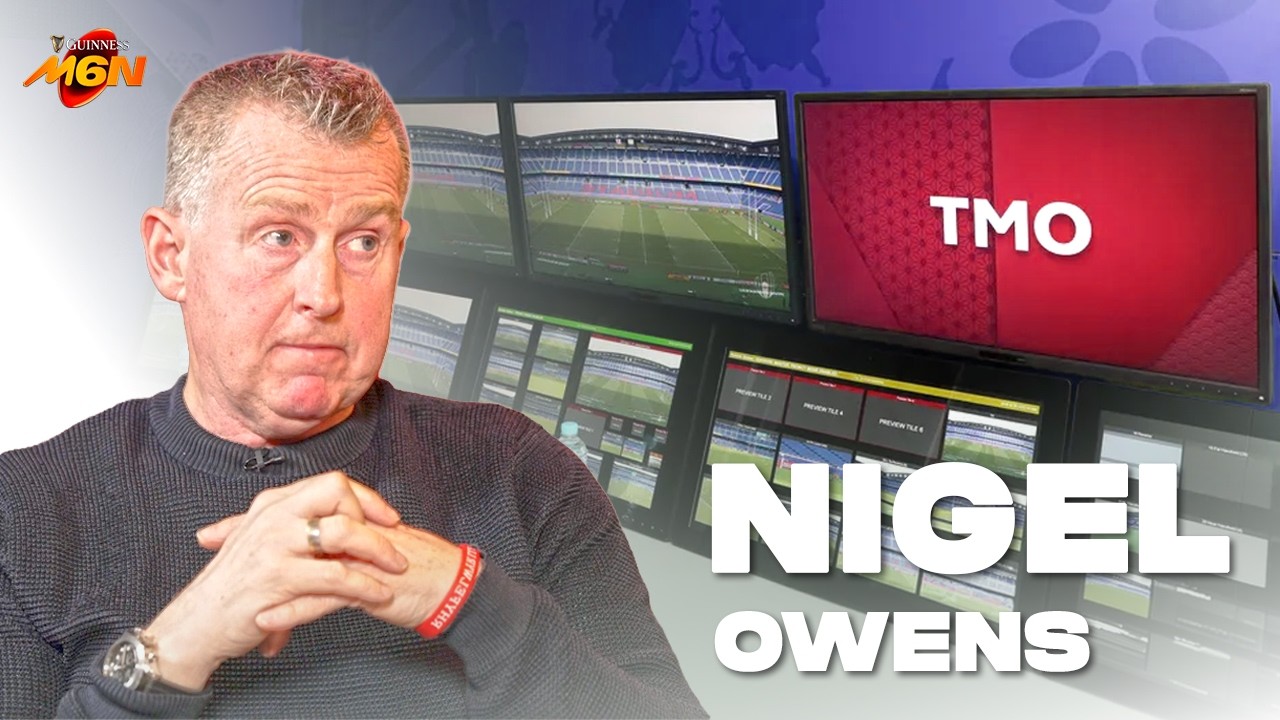
Nigel Owens has weighed in on the two pieces of refereeing from the 2026 Six Nations most likely to live on in the post-tournament inquest, and the former Test referee was crystal clear: the TMO is doing too much, not too little.
Speaking to RugbyPass's rules show, Owens laid out a principle he said he wants the officiating group to return to ahead of the July Tests.
"That's what I would like to see more of — just the TMO use for the act of scoring and let the referees. Because without the TMO I guarantee you the referees will get most of these decisions themselves and get them right. But because the TMO is there, this is where we're having a bit of an issue sometimes."
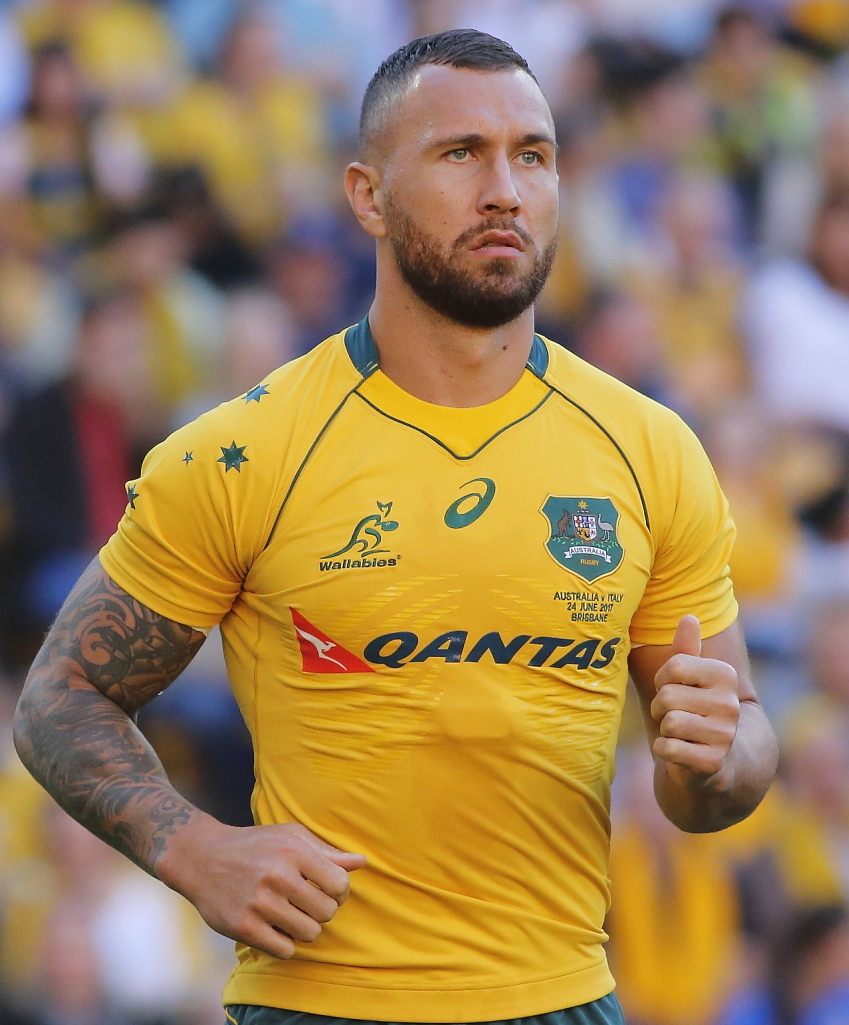
The first moment Owens broke down was a 48th-minute Caelan Doris tackle on Ashman during Ireland-Wales, where the Welsh ref saw the contact as a high tackle and initially played advantage. The TMO, Owens said, performed exactly the job the protocol is designed for.
"The referee sees it and he plays advantage that there is a that is a high. So he's seen the thing. So the TMO then — and this is the part I like about the TMO — when the referees sees something, deals with it, the TMO sweeps up to make sure that the referee's actually seen the correct picture."
On the merits of the Doris decision, Owens said he would have backed the penalty-only outcome despite acknowledging head contact.
"Yes, I think there is head contact. The degree of danger is very low because if you look at the tackle, he's sort of absorbing the tackle. So most of the force is coming from the ball carrier into him who's actually sort of absorbing it. Rather than actually going into it. You could argue another referee another day may well have felt it was worthy of a yellow card or a TMO may have. I wouldn't say that would be necessarily wrong, but I think on this instance here, a penalty only is sufficient for this."
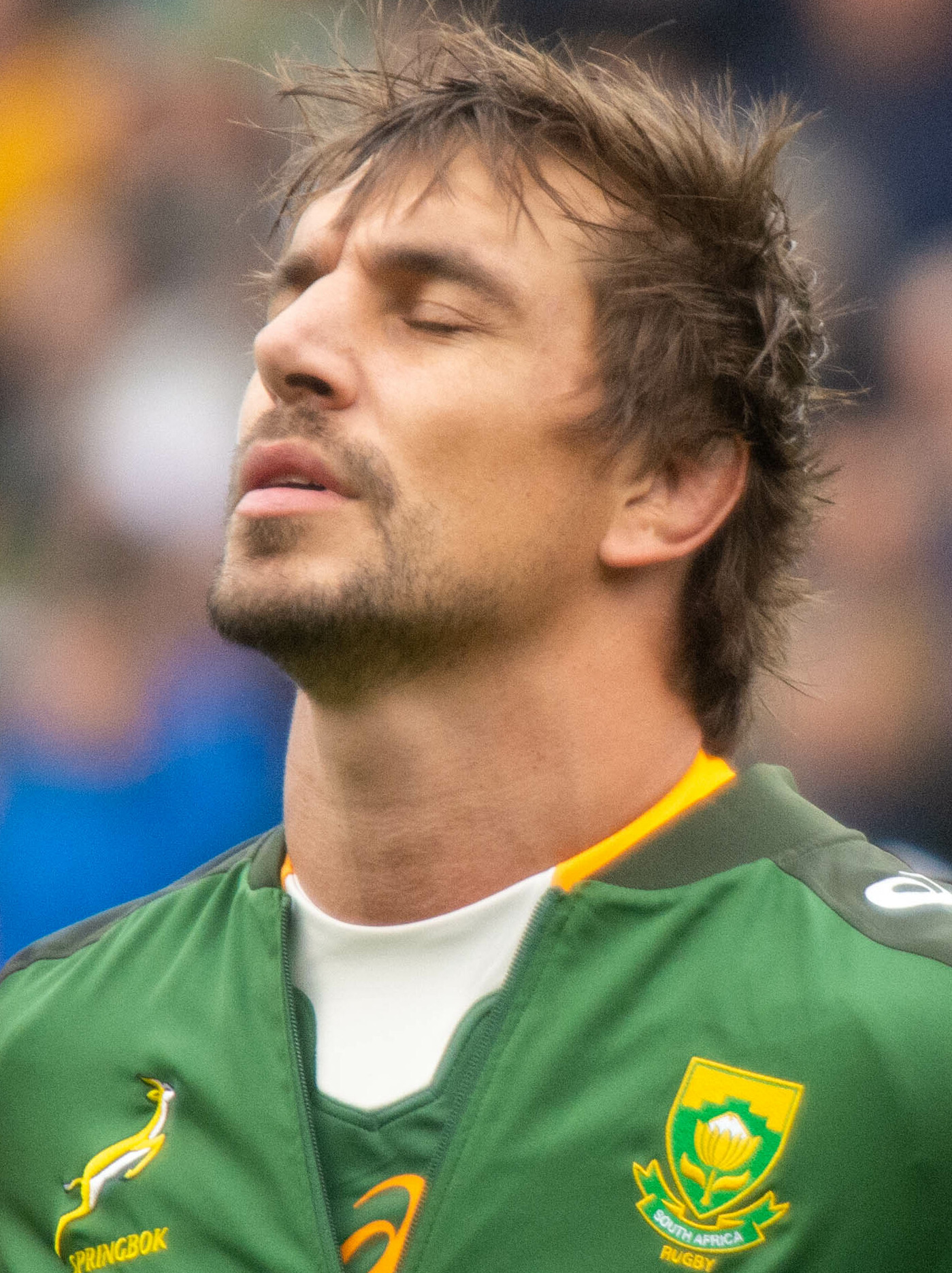
It was the more complicated passage in the England-France decider that drew Owens's sharpest criticism. With England in possession, an apparent penalty-advantage knock-on was called by the referee. England played on, kicked ahead, and were then punished when France counter-attacked and scored through Louis Bielle-Biarrey. After the try, the TMO stepped in to tell the referee the original call was only a knock-on — but England had already committed to the phase as if a penalty was coming.
Owens's read was unambiguous.
"Personally, I would have stuck with my on-field decision. I would have given what I've seen and this is what I'm going to do. If you then are going to change that view, then I think you have to understand. So you have two options. You either say that no, I'm happy with this and then you carry on. Or you go, 'Look, I got this wrong. The fair thing to do here is England, I appreciate you thought you had a penalty advantage, not the case. So I'm going to go back. It'll be a scrum. Your ball from the knock on.' That is for me the right thing to do."
Crucially, Owens also pointed out that the TMO intervention itself appeared to fall outside current protocol.

"What the official team will learn from this is that scenario — stick with your on-field decision because the team actually was outside of protocol. You can't come in for that. It's not within protocol to come in for that. So that's the first thing. You shouldn't have come in for that."
If the intervention was going to happen, Owens argued, the remedy had to be honesty with the players on the field — rewind, apologise, and give England the scrum rather than let France score off the back of a changed call.
The second structural issue Owens flagged for law-makers was advantage. Across the 2026 championship, Owens said refereeing was "overall good," but the treatment of penalty advantages had been noticeably inconsistent across games and across officials.
"We've seen it in the Six Nations — very different inconsistencies about lengths of advantage. Penalty advantage called over pretty quick. Others gone on long and then come back where others haven't. So it is a bit of a grey area."
His preferred fix is not to impose a blanket number of phases or metres, which he argued would encourage teams to take the three points rather than chase advantage at all.
"If you're going to say 20 metres is over, the team who's got them, 'No, I don't want it. I'll have the three points please.' So it's a very difficult one. I do think it needs to be a little bit more tightened up and a little bit more consistency, but I think the main thing is as long as the referee is consistent himself in the game, it shouldn't really matter that one referee plays advantage a couple of seconds longer, a couple of phases longer than the one next week — as long as you're consistent yourself in the game."
The underlying message from Owens, as rugby heads into the summer Test window with World Rugby protocols under review, was that fewer TMO interventions — and cleaner lines on what counts as advantage — would produce better and more trusted officiating. For a sport currently losing headline minutes to replay booths, that may be the most important call of the Six Nations cycle.