Ireland's move to offer Massimo De Lutiis a reportedly life-changing contract has set off alarm bells in Australian rugby, with one leading analyst warning that no Wallaby is safe from Northern Hemisphere poaching.
De Lutiis was named this week in Australia's 40-player squad, the only uncapped player in the group. It was a breakthrough moment for a talent who has already worn an Australia XV jersey and represented the Junior Wallabies. But days later, reports emerged that Ireland had tabled a contract designed to eventually qualify him for Test rugby on residency grounds.
The approach has been pilloried by Australian rugby writer Nick Wasiliev, who described the play as naked recruitment rather than development.
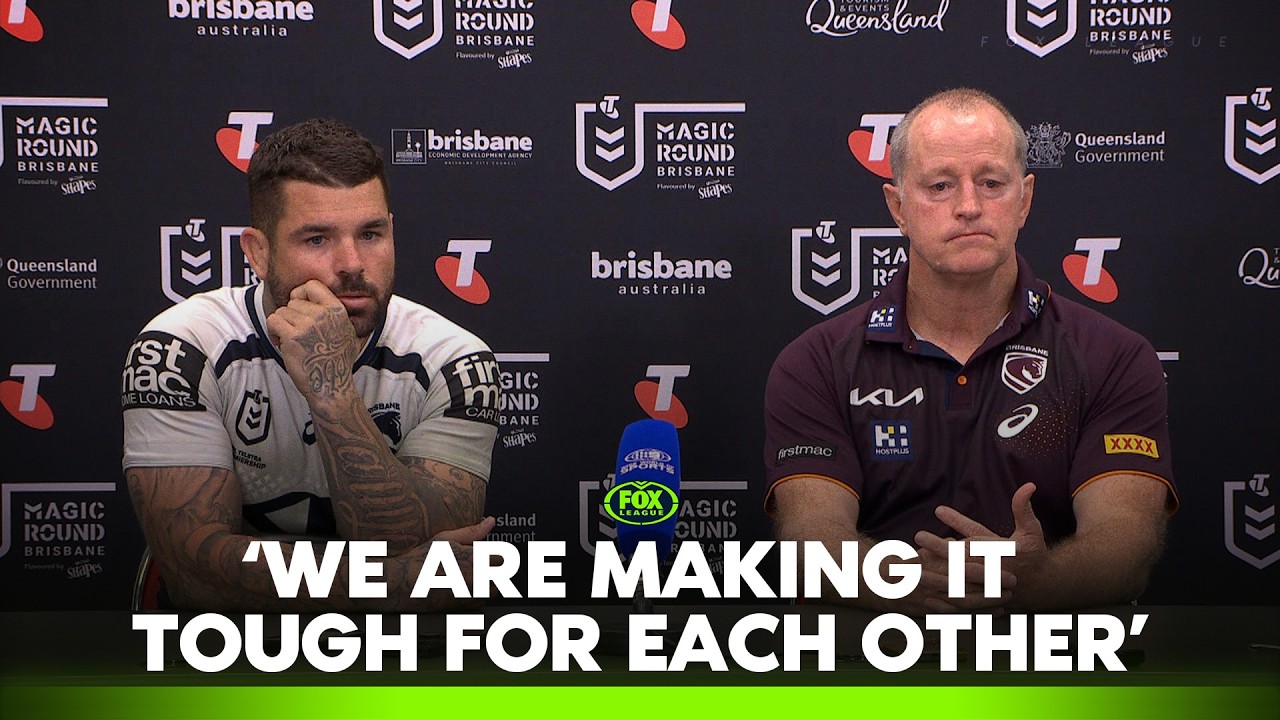
"This is quite you're quite literally now just trying to poach the best players possible," Wasiliev said. "This isn't about juniors or this is like you're not not developing juniors. You're not kind of giving someone a chance who's eligible. You are just trying to decimate. You were basically trying to turn us into club footie and that to use strong language is [expletive]."
Wasiliev argued that De Lutiis's pedigree separates this episode from earlier cases where Australians left because they could not find opportunities at home.
"It's not again it's not like a Tom Sunforth who moved over to the top 14 when he wasn't getting opportunities and then all his way his time," he said. "You are just trying to poach the best flyers."
His frustration is rooted in how squarely De Lutiis sits inside Australia's development pipeline.
"This is a guy that put on a straight Australia XV jersey two years ago as a 20-year-old or 21 year old something like that," Wasiliev said. "This is a guy who played for Junior Bies. This is a guy who at no stage has looked like leaving the Australian system."
The context matters. De Lutiis is understood to have a player of national interest clause in his contract with Rugby Australia, meaning his release to overseas clubs is not a simple commercial decision. He has been widely considered a Test selection in waiting — a point reinforced by his inclusion in the 40-man group as an uncapped face.
That makes the Irish offer different in kind, not just degree. It is not an Australian player slipping abroad after being overlooked. It is an Australian player being actively recruited while still visibly on the national radar.
Wasiliev was nonetheless clear that criticism should not land on the player himself. De Lutiis has dealt with a difficult injury run, and a genuinely life-changing deal can reshape a family's future in ways a Wallabies contract sometimes cannot.

"I completely understand if he takes this with that. I completely understand if he takes it," Wasiliev said. "If you have had the injuries that he's had and you get a life-changing offer, you take a life-changing offer, but it's [expletive] that he'd be eligible for Ireland through this because and it sets a precedence of nobody is safe."
It is that final line — "nobody is safe" — that will worry Rugby Australia most. The governing body has been trying to stem the flow of talent to the Top 14 and the Premiership in recent years. This is something different: a Six Nations union using residency eligibility as a long-range recruitment instrument, rather than waiting for drift.
The practical implication is uncomfortable. If De Lutiis accepts, a player earmarked for Wallabies colours could spend the next three years on Irish soil before pulling on a green jersey — not as a makeweight, but as someone Australia planned to cap itself. If he declines, the precedent has already been set. Every high-ceiling prospect in Super Rugby Pacific now sits on someone's shortlist.
For a Wallabies setup trying to rebuild depth heading toward the 2027 Rugby World Cup on home soil, the loss of a Test-ready talent before his debut would be a significant blow — as would the signal it sends to other emerging players weighing where their futures lie.
Whichever way De Lutiis turns, the episode has accelerated a conversation Australian rugby had hoped to delay. The country's next wave of Wallabies is being treated as a resource to be fought over, not a pipeline to be protected. Wasiliev's line is already landing like a warning: nobody is safe.