Rugby's English professional club game is running through a structural rewrite, and TNT Sports presenter Craig Doyle used a talkSPORT appearance this week to put the shift into plain language: the Premiership is becoming a franchise league.
Doyle, speaking after a weekend of matches played at Villa Park, the Principality Stadium and the Tottenham Hotspur Stadium, argued that the competition's pivot away from promotion and relegation is the lever that has unlocked a new tier of investment.
"The game is changing. The league is changing," Doyle said. "It's becoming more independent. They're getting rid of relegation. It's turning into more of a franchise model now, which should bring more funds. We've seen that already. Red Bull going into Newcastle and Dyson going into Bath, which will mean it'll become bigger and more popular and we need more eyes watching it."
The Red Bull deal at Newcastle — a majority investment that rebrands the club under the Austrian drinks giant's sports portfolio — and Sir James Dyson's Bath project have both moved the ceiling of what is financially possible inside English rugby. Neither would have happened in a league structure where a bad season could deposit a billionaire's investment straight into the Championship.
That is the heart of the argument. A closed shop is an investable one.
For Doyle, the upside of the franchise pivot is visible in the stands as much as on the balance sheet. The experiment of playing Premiership fixtures at Premier League-scale venues has produced the kind of matchday crowds a traditional Friday night at a 12,000-seat ground cannot match.
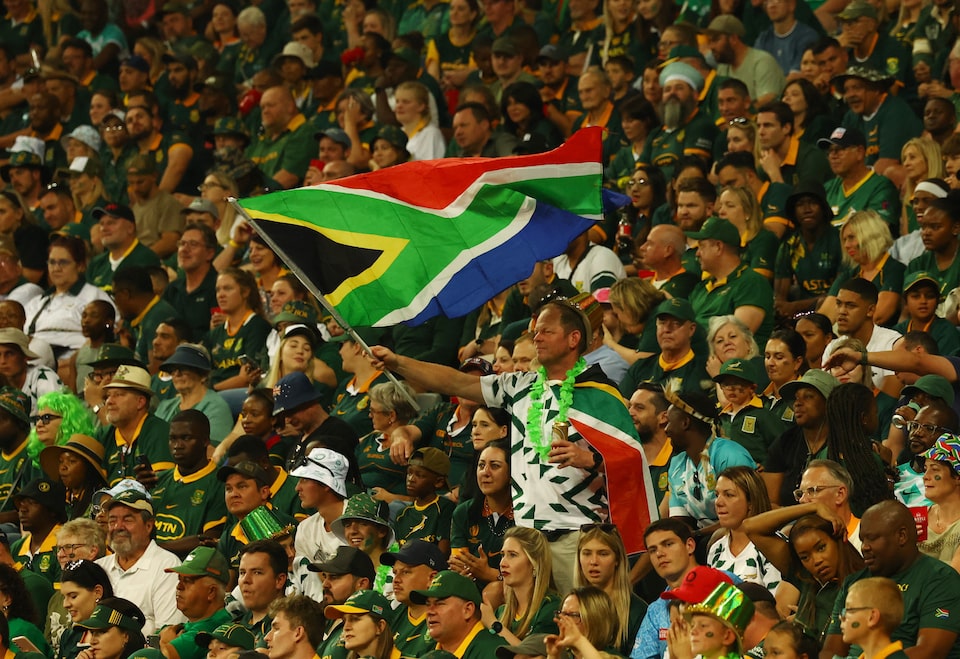
"Yesterday was awesome because we started Villa Park and then we went to the Principality Stadium in Cardiff," Doyle said. "Over 40,000 people there for that one. And Tottenham Hotspur Stadium last night for the Sars game was rammed. It was absolutely brilliant. So yeah, they have to do it. They've got to grow the game."
The flip side is the one the Championship's clubs — and most of the non-Premiership English rugby ecosystem — cannot avoid. Without promotion, the second tier's role as a genuine feeder dissolves, and the gap between the two tiers widens.
"In England, it's different. We just can't — our second division, our Championship, it's just not as competitive," Doyle acknowledged. "It's a brilliant league, but it isn't working really as a feeder for the most part into the Premiership. You might get two or three clubs who will be able to come into the Prem, and not all of their grounds are suitable. You need a certain minimum number of seats to be a Premiership club."
France, Doyle argued, is the counter-example. The Top 14 sits over a genuinely financed, rigorously competitive Pro D2 that funnels clubs up into the first division almost every year. England does not have a Pro D2.
The franchise model is not a solved problem. It lives alongside the proposed R360 breakaway league, an entirely separate bid to reorder the global game that has already pulled signatures from several Springboks and drawn blanket warnings from the unions. It runs into Championship clubs that will argue the ladder has just been pulled up behind them. And it depends on the same thing the Premier League depends on — television and matchday money scaling faster than the wage bill.
What Doyle's comments make clear is that the direction of travel is no longer in doubt. Red Bull at Newcastle and Dyson at Bath are not one-offs. They are the prototype for the Premiership's next decade.