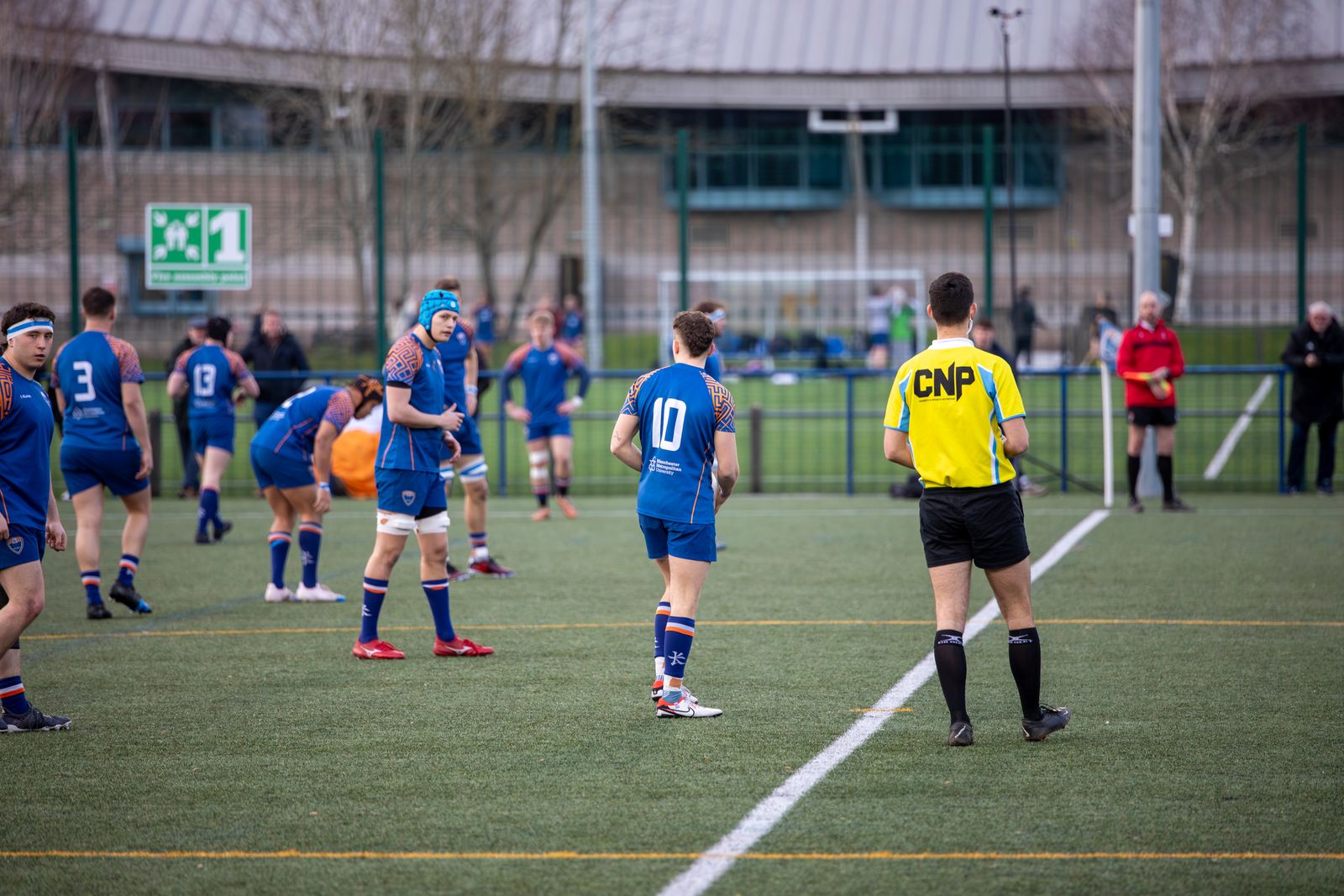
For one weekend in July, Wellington had no club rugby. Not because of weather, not because of a fixture clash - because the referees refused to turn up.
The Wellington Rugby Referees Association withdrew its services for the weekend of 10-12 July after three further incidents of abuse the previous Saturday. Every club fixture in the capital was cancelled. Round-robin matches were recorded as Match Not Played, with both teams awarded three competition points. It is close to unprecedented in New Zealand rugby, and it happened in the same week the capital hosted the All Blacks against Italy.
WRRA president and chair Ben Van Berkel had warned the union it was coming.

"As advised last week, we had informed WRFU that if further referee abuse was reported this season, we would not appoint referees to games the following weekend," he said in the association's statement. "We had three referee abuse incidents yesterday, so have advised WRFU that no referees will be appointed to games next weekend."
He was explicit that the association was not posturing. "I reiterate that this decision by the Executive Committee was not made lightly, but given the widespread nature of this continued abuse, we believe all reasonable options have been exhausted and need to take this stand to support and protect our members."
Speaking to RNZ afterwards, Van Berkel put it more plainly: "When we made that call on Sunday, Monday, we were never going to back down and appoint referees."
The raw numbers look small. Across roughly 2,300 matches in Wellington this season, the association logged 19 reports of verbal abuse: eight involving players, five involving coaches or support staff, the remainder from spectators. The referees' argument is not about volume. It is that a volunteer body already short of numbers cannot absorb even a handful of incidents a weekend without people walking away permanently - and every referee lost means games nobody can officiate.

New Zealand Rugby backed the walkout rather than trying to head it off. Mike Hester, NZR's general manager of community participation and development, was unambiguous.
"New Zealand Rugby is deeply disappointed that the actions of a small number of individuals during the community rugby season have led to the cancellation of this weekend's matches in Wellington," Hester said. "We fully support the decision of the Wellington Referees Executive Committee to prioritise the wellbeing of their officials."
He added: "Abuse in any form has no place in our communities, whether at work, in study or in sport, and rugby is no exception. Our game is built on respect, and we all have a responsibility to protect and promote that principle."
Wellington Rugby held an emergency meeting with club chairs, who were unanimous in supporting zero tolerance, and the union then made the decision to cancel the weekend itself rather than leave it in limbo. A meeting between the union and the referees on the Tuesday night produced a settlement, and the season resumed through to finals at Porirua Park on 25 July.

Wellington Rugby chief executive Tony Giles said the two bodies would sign a Memorandum of Understanding covering how abuse is handled from here. It "includes looking at escalation priorities for future events, looking at educational opportunities for both our players, clubs and sideline behaviours," Giles said, alongside closer work with referees attached to clubs.
Part of the response is Positive Vibes, a behaviour programme developed by Sport Waikato, which Giles wants Wellington to help pioneer. "Positive Vibes speaks to an opportunity to create culture change around supporting administrators," he said. The intent is to change the tone on the sideline before an incident occurs, with a linked strand aimed at parents in junior rugby.
Van Berkel said the group "walked away in a better place".
Wellington is not an outlier. Horowhenua-Kapiti postponed a round of club and college rugby last year after a referee at a college fixture was subjected to serious verbal abuse and physical intimidation - in the same region where a referee had earlier been threatened with being stabbed. Codes from football to netball have issued the same warning: sideline abuse is a leading reason officials quit.
The incidents in Wellington spanned junior club rugby, secondary school rugby and senior club rugby, and the reports did not come only from referees. Some were filed by members of the public who watched it happen.
The Memorandum of Understanding is worth exactly as much as the willingness on both sides to use it. The test arrives on an ordinary Saturday, when a marginal offside call goes against a team and a coach or a parent decides what to do about it.