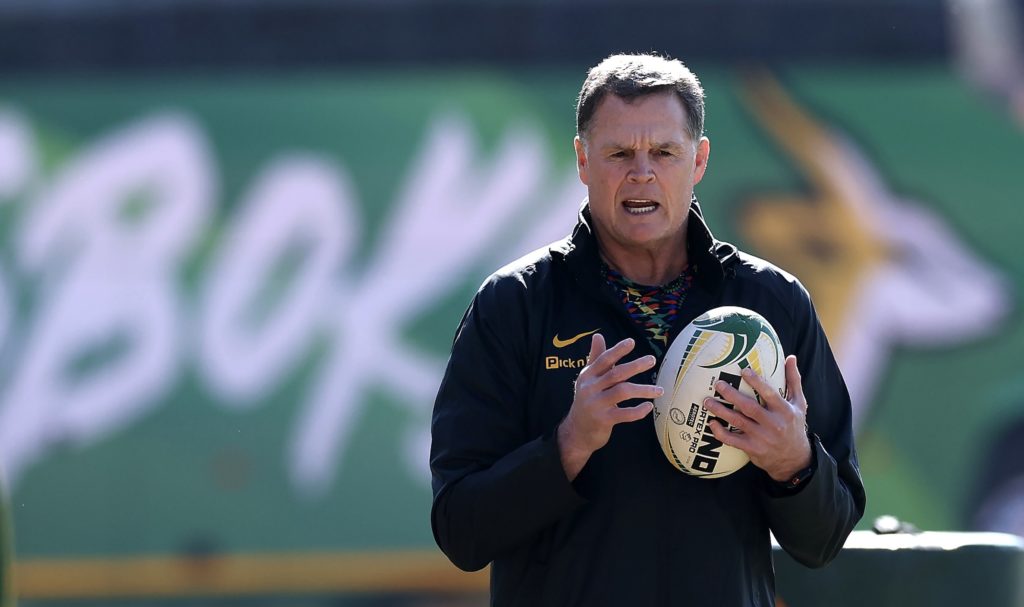
South African rugby has locked in a new set of rules governing how much punishment its professionals can absorb in a calendar year, and the timing is pointed. The deal was confirmed in the same week Rassie Erasmus stood in Buenos Aires and warned that the sport's schedule will burn players out if coaches do not keep rotating.
The two-and-a-half-year South African Rugby Industry Collective Agreement, known as SARICA, was negotiated between the players' body MyPlayers, the South African Rugby Union and the South African Rugby Employers' Organisation, which represents the provincial unions and franchises. Its headline provision is a guarantee of at least 12 non-contact weeks per contract year. Five of those are annual leave, three of which must be taken as an uninterrupted block in line with World Rugby guidance. The remaining seven can be made up of bye weeks, injury rehabilitation, travel periods or parental leave.
The agreement runs far wider than rest. It sets remuneration structures, medical scheme benefits, income replacement insurance for disability and catastrophic injury, concussion protocols, workload management, salary cap provisions and leave entitlements.

"SARICA is the foundation on which all rugby players are contracted," said SAREO chairperson Ettienne de Lange. "It ensures minimum standards of remuneration and employment for professional players, both men and women and is the default document for any player entering the profession."
De Lange stressed that it is not a Springbok-only document. "It regulates all areas of professional play from the Springboks down to age group teams and development players at unions."
The load question is the hard part, because South Africa does not have an off-season in the conventional sense. Since the franchises moved north in 2021, the country's leading players have been available to Test rugby, the United Rugby Championship, European competition and the Currie Cup across a 12-month cycle.
"Load management - of training and playing - is one of the cornerstones of player welfare and particularly complex in a South African rugby season that runs for 12 months," said MyPlayers CEO Eugene Henning. "SARICA reflects that with regulations that are founded on World Rugby's identification that individualised load management is the 'gold standard' approach to player welfare and recommends its implementation where possible."

Henning's view is that the year-round calendar is not, in itself, the villain - and he pushed back on the assumption that South African players are the worst off in world rugby.
"Professional rugby is played in South Africa every month of the year. However, thanks to the excellent and professional work of the employers' high-performance departments, the load profile of our players is frequently lower than that of players in other countries with a uniform close season," he said.
SA Rugby CEO Rian Oberholzer framed the deal as a consistency exercise. "SARICA balances the interests of everyone in the industry. It sets minimum employment standards, setting remuneration and benefits standards, ensuring player welfare to ensure that professional rugby in South Africa is run consistently and fairly."
Erasmus, speaking from Buenos Aires ahead of the one-off Test against Argentina, went a step further than the paperwork. His argument is that no domestic agreement fixes a problem created by the global fixture list.

"I am not scared or shy to say that the Rugby Championship and Rugby's Greatest Rivalry series should be moved to the February window," Erasmus said. "That is a resting period for our players and [if we move] there will be other resting periods for the players."
He was careful to concede he may not see the full picture. "There might be plenty of logistical issues and problems that I am not aware of."
What he was blunt about was the consequence of standing still. "We are going the rotation route, and keeping players fresh. Hopefully in the crunch matches, when it gets to World Cup time or Nations Championship play-off times, hopefully we peak. If you don't rotate, the players will definitely burn out."
SARU president Mark Alexander has made the same case at an administrative level, telling a media briefing in Cape Town that alignment between the hemispheres is a survival issue rather than a convenience.
"A global calendar is of utmost importance for the game worldwide," Alexander said. "We need to have a dedicated window for club [domestic] rugby, a dedicated window for the international game, and we need to have a dedicated rest period."
The strain is not a South African peculiarity. England travelled south this year without captain Maro Itoje, rested after a heavy season at Saracens, and France lost captain Antoine Dupont to a calf injury picked up in the Top 14 final.
"I would have liked for him to be present, like a lot of important players for us," France assistant coach William Servat told reporters. "But the biggest shame is for the players."
Former All Blacks centre Conrad Smith, now head of player welfare at the International Rugby Players association, has been arguing for a universal 30-match cap, a ceiling of six consecutive match involvements and mandated rest periods written into a global calendar.
South Africa already operates a 32-game cap and an eight-week mandatory rest protocol, and no locally based Springbok breached the game cap last season. Stormers fly-half Sacha Feinberg-Mngomezulu and Bulls captain Ruan Nortje topped the domestic list on 29 appearances. The franchises, for their part, have complained that the rest protocols are too rigid and that they get too little access to their marquee names.
That tension is the whole story. The employers say the system works. The players' body says it can be measured more precisely. The national coach says the calendar itself is wrong. SARICA settles the first two arguments for the next two and a half years. It does nothing about the third.