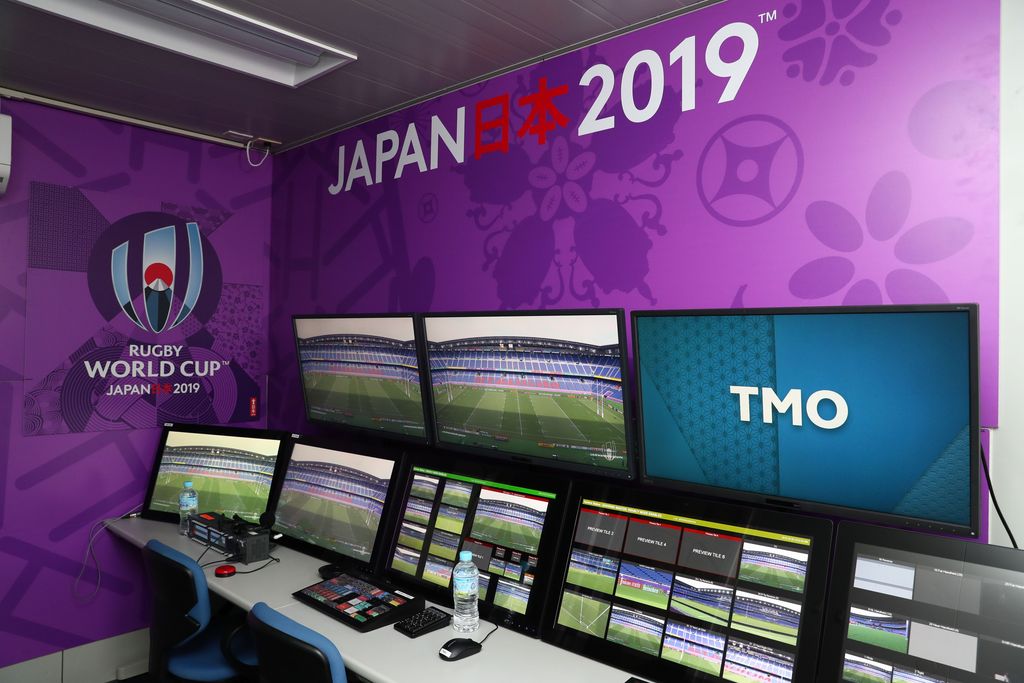
Nick Mallett has never been shy, and the former Springboks coach has picked his target: the television match official.
After a Nations Championship round in which reviews repeatedly stopped play, Mallett argued that TMOs have drifted well beyond their remit of correcting clear and obvious errors.
"When TMOs are looking for reasons to disallow a try, that is really stupid," he said.
"Your job is clear and obvious reasons. By all means go back if the ball is out, if there is a clear knock-on, if there is a clear bit of foul play, but when the ref has seen everything and awarded the try, to try and then go back is just really irritating."
His objection is as much about rhythm as accuracy.
"It just feels as though there is no rhythm in the game. We can't get the game going," Mallett said. "It's a blight on rugby at the moment because my heart just drops."
He is not alone. Dave Rennie raised a similar complaint after New Zealand's win over Italy earlier this month, a match in which the officiating team intervened repeatedly - including to rescind a yellow card shown to Ruben Love.
"There were a lot of breaks in play because there was a lot of dialogue and it seemed to take a lot of time to get to the right decision, so a bit of work to be done there," Rennie said.
His diagnosis was structural rather than personal, pointing at the four-person officiating team now operating at Test level.
"When you have a team of four, you have a group of guys who work a lot together and trust each other, and so I think that's the challenge," he said.
The Eden Park Test between New Zealand and Ireland produced the round's most contested call. Quinn Tupaea dived to knock the ball away from Tadhg Beirne; referee Nic Berry, after consulting TMO Ben Whitehouse and his assistants, awarded a penalty but no yellow card.
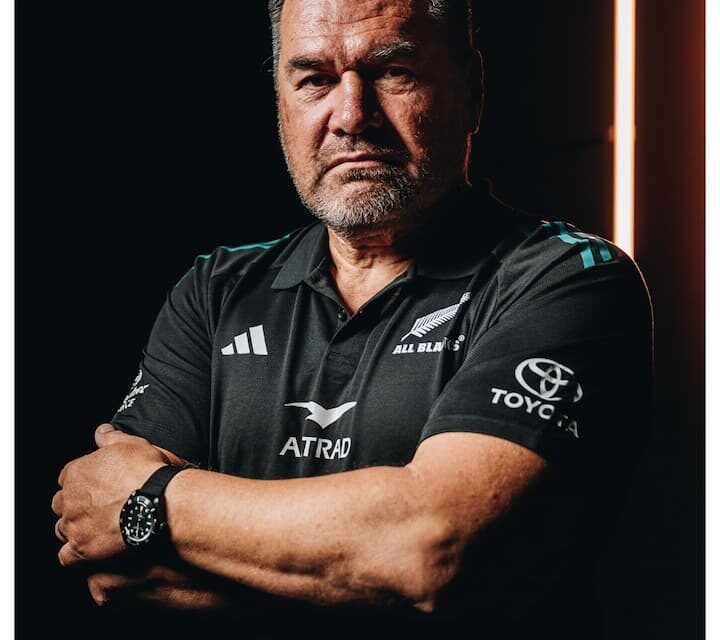
Former Ireland flanker Peter O'Mahony was scathing.
"I have no idea what's in his head. None," O'Mahony said. "It is 100 per cent a yellow card."
"I have no idea why it wasn't a yellow card because it was 100 per cent, out and out a line break for Tadhg Beirne."
Former Ireland wing Andrew Trimble applied a simpler test.
"If it's a penalty, it's a yellow," Trimble said. "There is a chance he could have caught it, but that's unlikely and that gets given a penalty; that's a deliberate knock-on every day of the week."
Rob Kearney was not so sure. The former Ireland full-back argued the incident carried more doubt than his fellow pundits allowed.
"His hand was up, it was cupping. There was a moment there when it could have been a low percentage chance where he could have caught the ball with one hand or even flip it back to himself and take it in," Kearney said.
That split - three former Ireland internationals unable to agree on one replayed incident - is close to the heart of Mallett's argument. More footage has not delivered more certainty.
World Rugby has already moved. Earlier this month it published a set of minimum TMO standards that competitions must meet by August 2027, covering camera access, control of the images shown to the referee, operator qualifications and technology capability.
"These standards formalise practices undertaken across men's and women's Rugby World Cups and World Rugby's 15s competitions," the governing body said.
A remote TMO hub is also being trialled at Hawk-Eye's headquarters in Basingstoke, England, servicing the World Rugby Nations Cup and the Junior World Championship in Georgia, with the aim of speeding up decisions and cutting costs for organisers.
Mark Robinson, World Rugby's chief of rugby, acknowledged the scale of the discontent.
"The use of officiating technology is one of the most debated areas in our sport," Robinson said. "These innovations are the first steps in a deep dive review of this area."
Mallett, for his part, is glad to be watching rather than working.
"Thank goodness I'm not coaching at the moment. I broke down a referee's door once to get inside and shout at him after a performance Italy against Australia," he said.