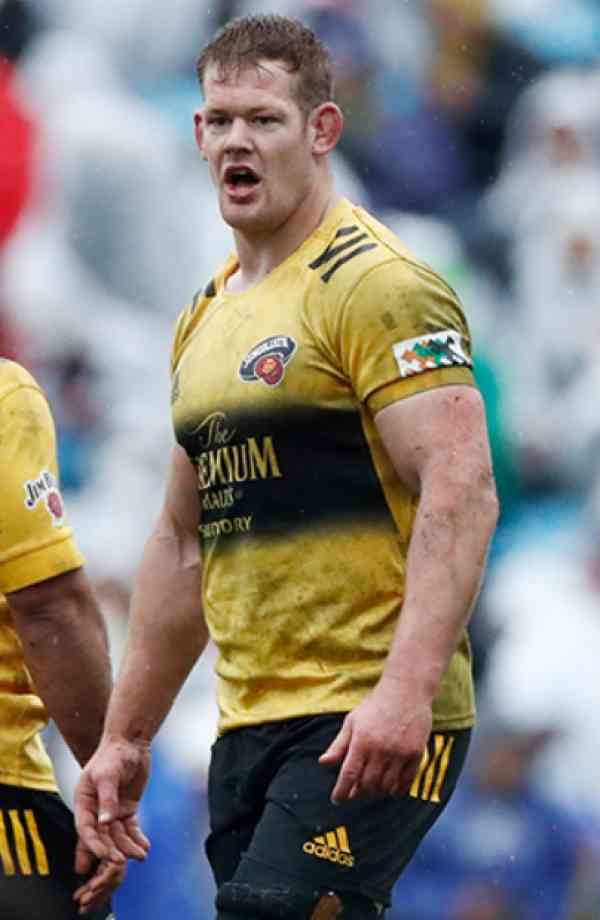
Tom Savage’s profile in professional rugby has long been built on the qualities coaches trust most in a forward: physical authority, defensive intelligence and a relentless work rate. Now operating as a flanker for Moana Pasifika, the 196-centimetre, 114-kilogram loose forward offers the kind of size and edge that can shape a pack’s identity. In a competition where back-row balance is often decisive, Savage brings a blend of power and experience that gives his side a hard-nosed presence around the collision and at the breakdown.
At 196 cm and 114 kg, Savage possesses the dimensions of a modern back-row enforcer. Those measurements are not simply numbers on a team sheet; they speak directly to the role he is asked to perform. As a flanker, he must cover ground, contest possession, disrupt opposition rhythm and provide force in both defence and attack. Size alone is never enough in that position, but when paired with timing and discipline, it becomes a significant weapon. Savage’s frame allows him to absorb contact, win collisions and remain effective in the tight exchanges that often determine momentum.
For Moana Pasifika, that profile is particularly valuable. The team has sought to build a competitive edge through physical commitment and collective energy, and flankers are central to that blueprint. Savage’s job is not always the most glamorous, but it is essential. He is there to clean out rucks, slow down opposition ball, make tackles in heavy traffic and carry into defensive lines that are set to punish hesitation. In many ways, the flanker role is rugby’s most demanding blend of graft and decision-making, and Savage’s game is rooted in those fundamentals.
His strengths begin with his defensive work. A player of his size can change how opponents attack simply by his presence in the line. Ball carriers know they are unlikely to get easy metres when a 114-kilogram flanker is meeting them squarely, and that has a cumulative effect over 80 minutes. Defensive pressure in rugby is not only about highlight-reel hits; it is about repeated accuracy, getting off the line, closing space and forcing errors. Savage’s value lies in that attritional side of the sport, where consistency matters more than spectacle.
Just as importantly, he offers real utility at the breakdown. The modern flanker must read the game quickly: when to compete for the ball, when to stay on feet, when to fold into the defensive line and when to commit to the next phase. Players who can make those choices well help their teams control tempo. Savage’s physical profile gives him the leverage to be effective over the ball and in the cleanout battle, while his experience helps him identify moments worth contesting. That judgment is often what separates productive back-row play from reckless expenditure of energy.
In possession, Savage’s contributions are often direct and purposeful. He is not on the field to drift to the margins and wait for space to appear. His role is to carry with intent, straighten the attack and generate front-foot ball for the playmakers outside him. Teams need forwards who can win the first collision and force defenders to commit, and Savage’s size makes him a natural option in those sequences. Even when he is not making line breaks, his carries can create the kind of platform from which Moana Pasifika can build pressure.
Another important aspect of his game is lineout involvement. At 196 cm, Savage offers a clear target in set-piece situations and adds flexibility to the forward pack. Modern rugby places a premium on multi-functional forwards, and any flanker who can contribute as a lineout option increases tactical variety. That matters over the course of a season, especially in matches where territory and restart control become decisive. A back-row forward with height, mobility and contact presence gives coaches more ways to structure both attack and defence.
Savage’s career has also been defined by professionalism and durability of purpose. Players in his mould tend to earn respect not through flash but through dependability. Coaches value forwards who understand their role, maintain standards and deliver the same intensity from week to week. In a squad environment, that kind of presence can be influential, particularly for younger players learning the demands of top-level rugby. Moana Pasifika, a side continuing to establish itself and deepen its competitive base, benefits from players who bring clarity to the hard parts of the game.
Current form for a player like Savage is often best measured less by headline statistics and more by impact areas: tackle volume, ruck efficiency, collision wins and set-piece contribution. Those are the metrics that define a flanker’s authority. While backs may be judged in tries and assists, loose forwards are often assessed by how effectively they tilt the contest in the unseen exchanges. Savage remains the kind of player whose best work can be felt as much as it is recorded. When Moana Pasifika are matching opponents physically and staying in the fight through the middle stages of a game, the contribution of a player like Savage is usually somewhere near the centre of it.
There is also a broader significance to his role within the side. Moana Pasifika’s identity depends on commitment, resilience and collective force, and flankers are often the players who embody those traits most clearly. Savage’s game aligns naturally with that demand. He is built for confrontation, but also for the discipline and repeat effort required in elite rugby. The best back-rowers combine aggression with control, and that balance is what gives a team trust in big moments.
As the season unfolds, Savage stands as an important figure in Moana Pasifika’s forward effort. His listed profile — flanker, 196 cm, 114 kg — captures the raw outline of the player, but not the full value he brings. His real worth lies in the work between the highlights: the tackle that halts momentum, the cleanout that secures possession, the carry that bends the line, the lineout take that relieves pressure. Those are the actions that knit a performance together.
For Moana Pasifika, Tom Savage represents exactly the kind of forward every ambitious side needs: seasoned, uncompromising and built to influence the contest where it is most fiercely fought. In a game increasingly shaped by speed and space, he remains a reminder that control still begins with physical authority and the willingness to do rugby’s hardest work.