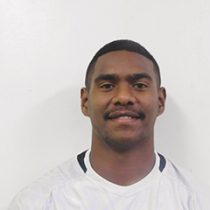
In the demanding world of professional rugby, back-row forwards are judged on a simple but unforgiving standard: influence. They must carry hard, defend relentlessly, compete at the breakdown and bring physical authority for 80 minutes. Veresa Tuqovu Ramototabua fits that profile. The Castres Olympique flanker has the size, athletic framework and positional skill set to make him an intriguing figure in one of French rugby’s most combative environments.
At 1.95 metres and 107 kilograms, Ramototabua possesses the dimensions coaches covet in a modern flanker. He brings genuine size to the loose forwards without sacrificing the mobility required for the role. In today’s game, where flankers are expected to move seamlessly between heavy traffic around the ruck and wider defensive assignments, that blend of reach, power and work rate is essential. For Castres, a club long associated with intensity, forward grit and tactical discipline, a player of Ramototabua’s profile naturally carries value.
The flanker’s role remains one of the most complex in rugby union. It is not merely about tackling or carrying; it is about reading the rhythm of a match and arriving at the right place a fraction earlier than the opposition. Ramototabua’s physical profile suggests a player built for that kind of high-impact involvement. His height gives him presence in contact and utility in contestable situations, while his 107kg frame equips him to absorb collisions and impose himself defensively. In a competition as bruising as the Top 14, where forward battles often decide territory and momentum, those traits matter enormously.
Castres Olympique have built their reputation over many seasons on resilience and a willingness to embrace attritional rugby. Within that structure, flankers are expected to be both enforcers and connectors. They must protect possession, slow opposition ball, support ball carriers and repeatedly win the race to the breakdown. Ramototabua’s position places him at the heart of that work. Even when a flanker’s contribution does not dominate the highlight reel, it often shapes the match in subtler ways: a disruptive cleanout, a tackle that halts momentum, a carry that gets a side over the gainline, or a defensive read that closes down space before danger develops.
That is where players like Ramototabua earn their standing. Rugby remains a sport that prizes visible physicality, but elite back-row play is also about repetition and detail. The best flankers stack small wins across a contest until they become decisive. For a player operating in Castres’ system, consistency in those moments is often as important as headline-grabbing interventions. Coaches value trust, and trust in the back row is built on reliability under pressure.
Ramototabua’s size also offers tactical flexibility. A 1.95m flanker can contribute to lineout structures, either as a primary jumping option or as a supporting presence who gives a pack greater variety. That dimension is increasingly important in modern squad construction, where versatility across forward roles can change the complexion of a match-day 23. A flanker who can add lineout value while maintaining breakdown effectiveness gives his side more balance and allows coaches to manage combinations more creatively.
Physically, he appears well suited to the demands of the French game. The Top 14 is renowned for its intensity, depth and unforgiving weekly collisions. It is a league in which forwards are tested not only by raw power but by the tactical nuance of territory-based rugby and the cumulative fatigue of long defensive sets. A player of Ramototabua’s build is equipped to compete in those conditions, particularly in matches where defensive discipline and ruck control become decisive.
His strengths, on paper and by position, are clear. First, there is his frame: tall, powerful and built for contact. Second, there is his natural fit in the back row, a zone that demands a balance between aggression and intelligence. Third, there is the value of his role within a team like Castres, where flankers are central to preserving the club’s traditional edge. A player with his profile can influence games through collision dominance, breakdown pressure and support work in both attack and defence.
There is also an important developmental angle to his career. For many forwards, particularly those in the back row, progression is not always linear or easily captured by basic statistics. The position often resists simple numerical storytelling because so much of the work is connective rather than isolated. A flanker can transform a team’s performance through defensive organisation, ruck presence and physical tone without necessarily posting the kind of numbers that define backs or primary ball carriers. In that sense, Ramototabua’s growth should be measured by his increasing authority within Castres’ forward unit and by the trust he earns in high-pressure situations.
The modern game has raised expectations for flankers. They must be durable enough to survive repeated collisions, quick enough to defend in transition, skilful enough to handle the ball under pressure and disciplined enough to avoid costly penalties at the breakdown. Ramototabua’s profile suggests a player capable of meeting many of those demands. His challenge, as with any forward seeking to cement himself at a high level, is to turn physical promise into sustained influence over the course of a season.
For Castres Olympique, that is the enduring appeal of a player like Veresa Tuqovu Ramototabua. He offers size, positional relevance and the kind of physical toolkit that translates well to elite club rugby. In a side that values effort, confrontation and collective steel, his role as a flanker is a significant one. If he continues to sharpen the details of his game and impose himself consistently in the contest areas that matter most, he has the attributes to become an increasingly important figure in Castres’ back-row rotation.

In rugby, reputations are often forged not in open space but in the crowded, punishing exchanges where matches are won. That is the flanker’s territory. And for Ramototabua, it is the stage on which his career at Castres Olympique will be defined.