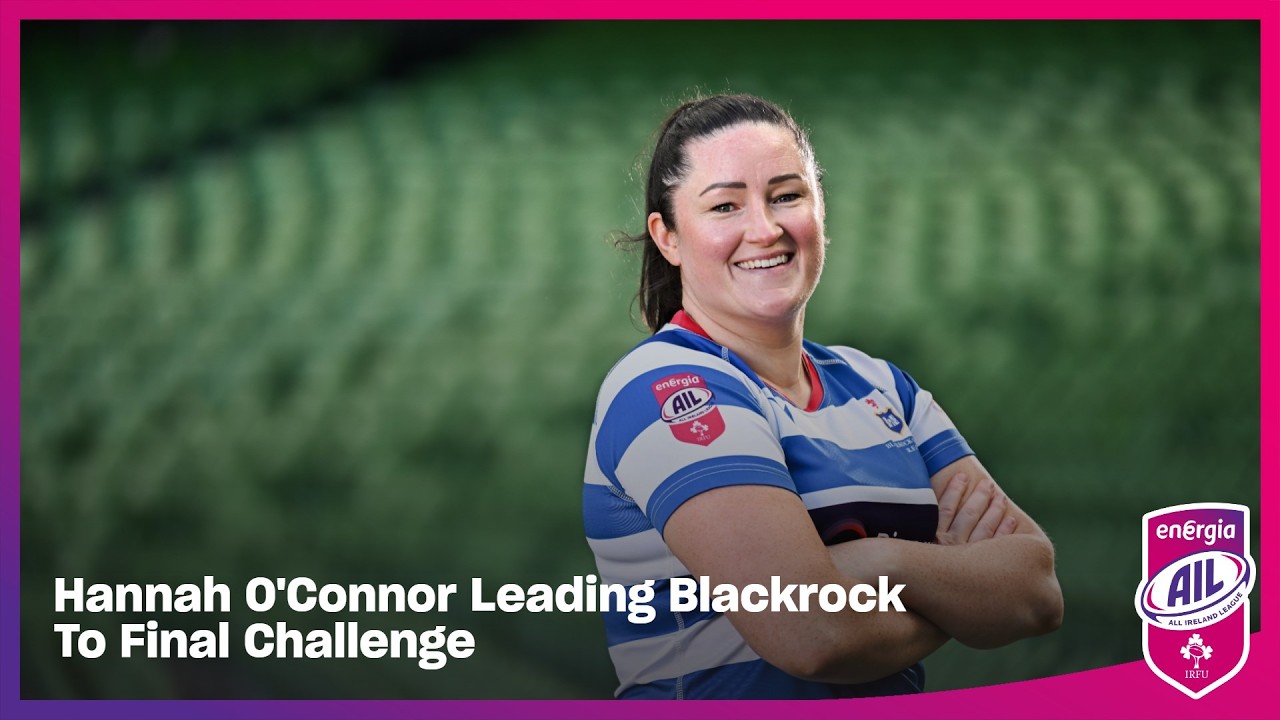
Ireland have two home games to finish their Guinness Women's Six Nations, and back-row forward Hannah O'Connor is selling neither of them short. After a fallow week and a defeat in France, Ireland host Wales at the Affidea Stadium in Belfast on Saturday with a chance, O'Connor told the RTÉ Rugby podcast, to do something this group has not managed in years: win three home games in a row to close out a championship.
"It kind of whets the appetite again, doesn't it?" O'Connor told podcast host Neil Treacy. "After the break week, you're mad to rip into it again. So, yeah, excited for this one. Nice to finish with two home games."
Ireland's championship has so far featured difficult away trips to England and France, and a home opening win over Italy. Two home matches at Belfast and at the Aviva to close the campaign — first against Wales, then versus Scotland — represent both an opportunity and a question of mentality. As O'Connor put it, "There's nothing like ripping into two home games to finish the competition off strongly."

The schedule, she said, has worked in Ireland's favour despite the brutal opening: get the toughest fixtures done while the squad is freshest, then take a rest week to reset for back-to-back home games as favourites.
"It's really favoured us that we've given France a real good crack at that for that first 40 minutes in Clermont and to come away with a disappointing result, to have a week to refresh the bodies and minds, have the mini camp, and get ready to rip into two home games," O'Connor said.
The discussion soon turned to one of the championship's quieter selection debates. Listener Margaret had emailed in arguing that Dannah O'Brien's kicking is excellent but her attacking threat insufficient, and floated Katrina Finn — three-time player of the match in last year's interpros and a try-scorer in last weekend's All-Ireland League final — as a player who deserves senior minutes.
O'Connor's response was characteristically diplomatic but pointed. She acknowledged the wider question of depth at out-half, particularly with Ireland running a 6-2 forwards-backs split on the bench in recent weeks, leaving Stacey Flood as the only realistic backup to O'Brien at 10 or 15.
"Dannah offers a hell of a lot in both attack — and her defensive game has improved a decent amount since what we've seen of her last," O'Connor said. "She's obviously a bit like Sam Prendergast: she comes under severe pressure for that. I think that's improved. But her kicking game can't be overlooked in what she offers us."
She did not close the door on Finn, however. "Why not blood younger players coming through? Katrina Finn played a huge role in Blackrock managing to beat us in that AIL final a couple of weeks ago. She's also gone on to link in and get minutes with the under-21 squad — when they beat England by a tiny margin, that was a huge scalp for them to take. So she is on form, she is putting it out there."
The wider issue, O'Connor said, is that Scott Bemand has used a relatively concentrated 27-player group across the championship's first three games. Players like Beth Buttimer, Aoife McGrath, Jemima Adamson-Verlinger, Sophie Barrett, Aílis Quinn, Aoife Riley, Finn, Niamh Gallagher and Alana McInerney remain on the fringe, with Riley sidelined through injury.
Asked which of that group might break in, O'Connor leaned toward Buttimer as a player she would personally love to see exposed to senior international rugby across these final two weekends. Buttimer has been a constant presence on training squads, on warm-ups before all the championship matches, and on the throwing drills with Cliodhna Moloney and Neve Jones. Whether Bemand pulls the trigger now, with two home games to manage, will be the most telling indicator of his medium-term thinking ahead of the 2029 World Cup cycle.

For O'Connor herself, the goal is simpler. Ireland have not won three Six Nations games in succession in years, and getting to that figure in front of home crowds in Belfast and Dublin is, she said, the kind of finish that defines a group's season. After Italy, England and France, Wales and Scotland are the games where Ireland are clear favourites — and the games where any drop in standards is immediately punished by the championship table.