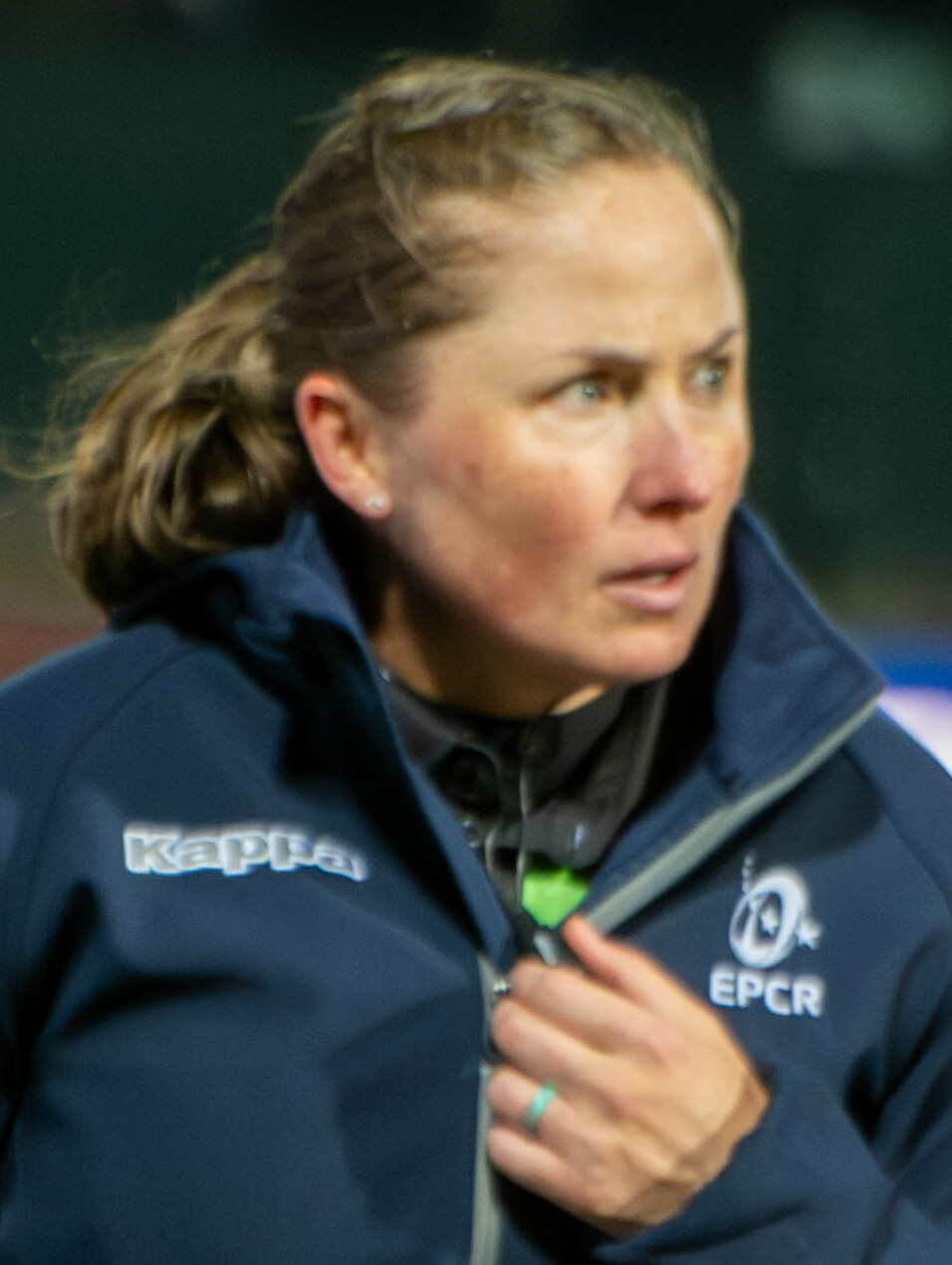
Aimee Barrett-Theron has refereed some of the biggest fixtures in the women's game and broke ground as the first woman to take charge of a men's match in South Africa. Now the 39-year-old is stepping away from the whistle to face a different kind of test.
Barrett-Theron announced on 15 July that she has been diagnosed with breast cancer and will stand down from officiating immediately to concentrate on treatment and recovery. She confirmed the news herself, striking a characteristically composed tone.
"I've recently been diagnosed with breast cancer. The good news is that it's treatable," she said. "I'll be stepping away from refereeing while I focus on treatment and recovery."
The South African is the most-capped female Test referee in history, having officiated 52 internationals, and has worked across the United Rugby Championship and the Women's Six Nations. Her most recent appointment was South Africa 'A' against Zimbabwe in June. She has spoken openly in the past about being autistic, describing it as a strength in the middle rather than an obstacle.
She framed her diagnosis in the same terms that have defined her career. "Refereeing has taught me a lot about resilience, discipline, pressure, and backing yourself," she said, adding that she is "even more determined to get through this and return to the field stronger."
Barrett-Theron also used the moment to send a wider message, urging others not to ignore warning signs. "Check yourself, listen to your body, and don't delay getting anything unusual looked at," she said.
The tributes were immediate. World Rugby chair Brett Robinson said the sport was rallying around one of its most respected officials.

"I know that I speak for the global rugby family in extending our love and support for Aimee," Robinson said. "Aimee is an exemplar of the values of our sport, an exceptional role model."
Robinson praised the "steely determination" that carried her to the top of international refereeing and said the officiating community would support her throughout treatment. "We wish her a speedy recovery and look forward to seeing Aimee back," he added. SA Rugby president Mark Alexander joined the messages of support, hailing her as a trailblazer for the South African game.
Barrett-Theron's absence leaves a notable gap in a refereeing group she helped define, but her own focus, for now, is elsewhere — and, by her account, on returning to it.