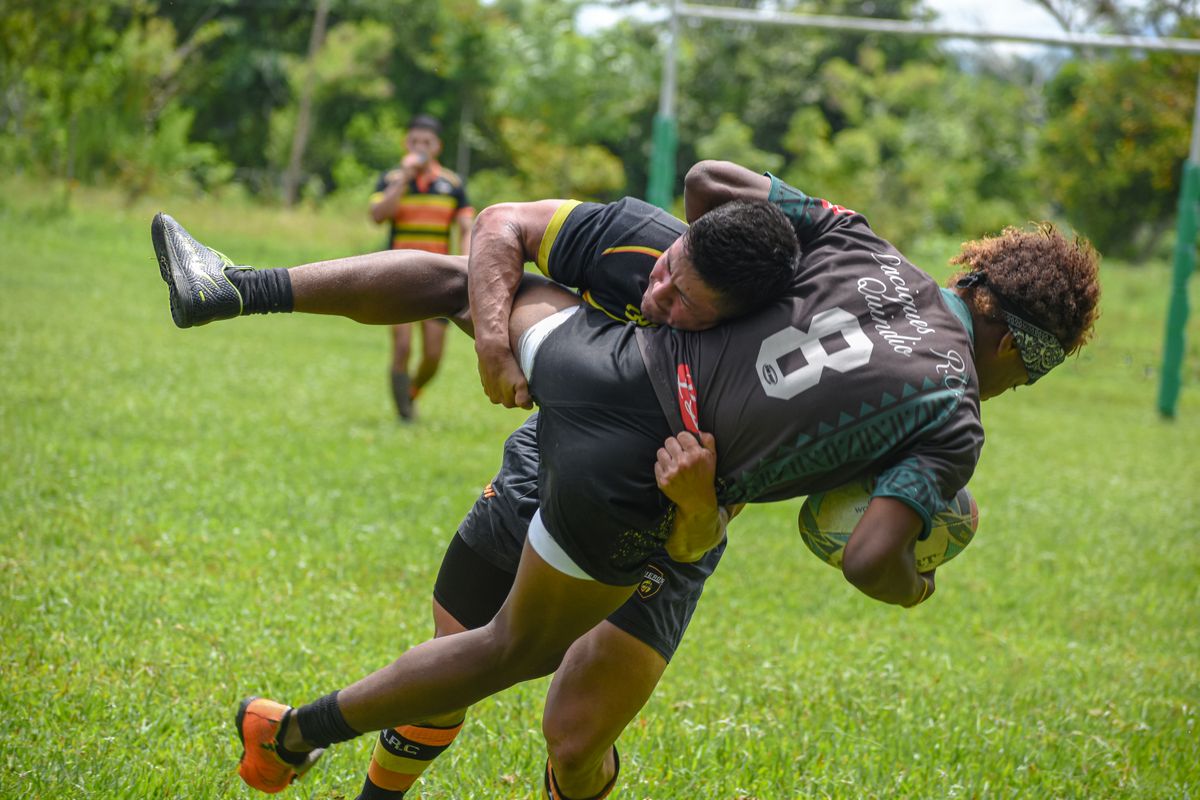
World Rugby has approved a permanent reduction in the legal tackle height across the community game, the headline measure in a package of five law changes ratified by the World Rugby Council in Dublin on Tuesday.
From 1 July 2026, for seasons starting after that date, unions running grassroots rugby will be able to set their legal tackle height at either the waist or the base of the sternum. The move follows two years of trials run across 10 national member unions that studied more than 150,000 tackles before the governing body committed it to full law.
According to World Rugby, the evidence was clear-cut. "The decision, taken by Council today in Dublin, Ireland, comes after extensive evaluation of trials run across 10 national member unions involving more than 150,000 studied tackles demonstrated positive player behaviour," the governing body said. "The trials showed that a lower legal tackle height was effective in reducing the chances of upright tackles occurring, which are the most likely to cause avoidable head impacts."

World Rugby chairman Brett Robinson framed the change as a welfare-first decision aimed at the amateur players who make up the vast majority of the sport. "Player welfare is at the heart of everything that rugby does. I welcome the adoption of a lower tackle height into community law," Robinson said.
"I would like to thank all the unions and academics and most importantly players and referees who took part in the trials that have helped us to reach this point. The trials from around the world show that this is the right thing to do to make our game safer and more enjoyable for community players who are the lifeblood of our sport."
Robinson pointed to rugby's wider track record on head-injury measures, including the rollout of instrumented mouthguards in the professional game. "Rugby has always led the way when it comes to making considered changes to improve the welfare of our players and alongside provisions such as smart mouthguards in the elite game, we've shown time and again that we'll make the big calls and that we're getting them right, backed by the evidence," he said.
The community tackle-height change is the most prominent of five trials waved into full law. The others are the scrum brake foot, new restrictions on water carriers entering the field of play, the formal recognition of the television match official as part of the match-day officiating team, and the continued option for elite competitions to use 20-minute red cards if they choose to.

Crucially, the new ceiling applies to the community game only. There is no change to the legal tackle height in the professional or international arena for now, though World Rugby confirmed the first trials of a lowered elite tackle height will run at the men's Under-20 Junior World Championship in Georgia from 27 June, giving administrators a look at how the measure plays out at a higher tempo.
Lowering the tackle line has divided opinion since England first trialled a below-the-sternum law at grassroots level, with some warning it changes the spectacle of a collision sport and risks pushing more contact toward a ball-carrier's hips and knees. World Rugby's counter is that drilling a lower, safer technique early produces better, more durable tacklers by the time players reach the levels where higher tackles remain legal. Earlier research tied to the community trials has also been linked to a measurable drop in head-on-head contacts, the data the governing body leaned on in Dublin.
Unions retain the ability to apply Game On community law variations to adapt secondary areas such as pick-and-go and double tackles. The full revised wording of all five laws will be published in the World Rugby Laws section and takes effect from 1 July.