South African prop Asenathi Ntlabakanye has been handed an 18-month ban after testing positive for two prohibited substances, with the suspension running from 13 May 2026 through to 13 November 2027 — a date that, by cruel coincidence, will be the day of the 2027 Rugby World Cup final.
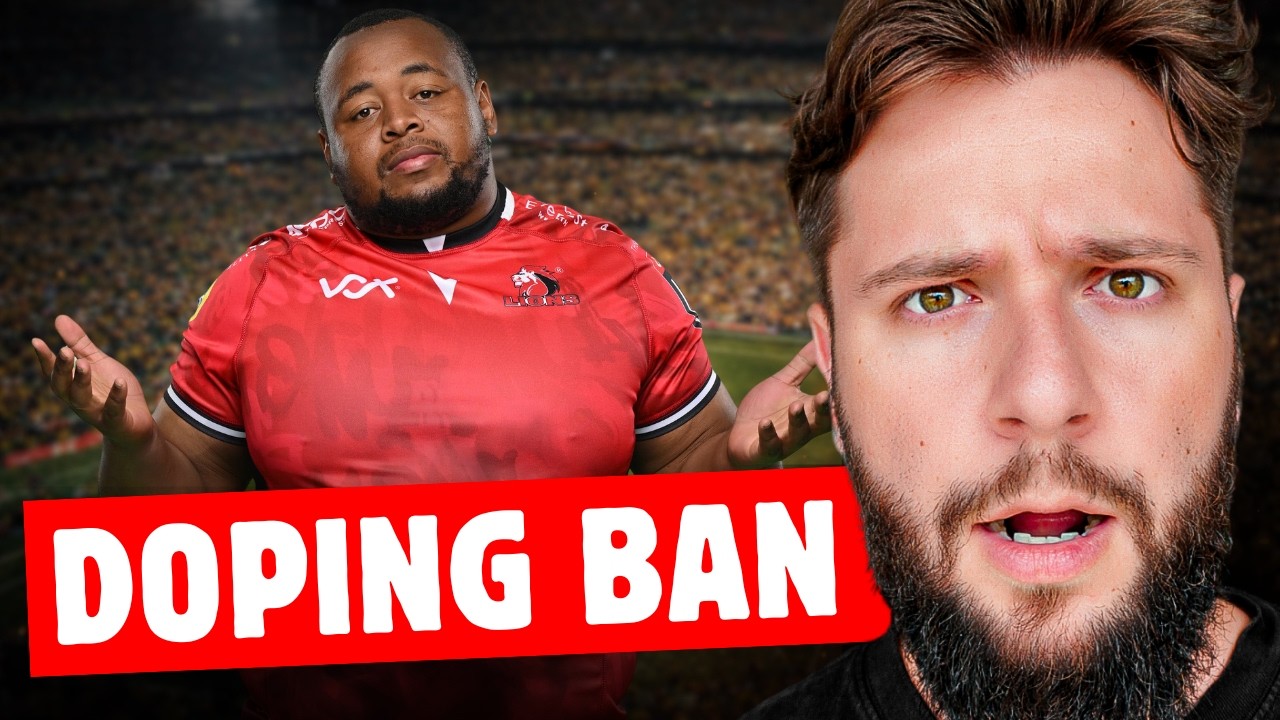
The Lions tighthead, 27, was caught by a urine sample collected on 22 May 2025. Two violations were registered: anastrozole, a non-performance-enhancing hormone modulator, and DHEA, a prohibited anabolic steroid. South African pundit Jordan Buhrs broke the story down on his rugby channel within hours of the verdict landing, noting that Ntlabakanye himself self-declared the DHEA — a detail that Buhrs argued was central to the relatively light sanction.
"He voluntarily admitted it, which SARU says he acted in good faith," Buhrs explained, "and maybe that is why he only got 18 months." Ntlabakanye's defence was that both substances had been prescribed by a specialist physician, with what SARU publicly framed as proper medical oversight. The tribunal's verdict, delivered on 14 May after a two-day hearing in March and closing arguments on 21 April, was nonetheless that a player carries the can no matter the source.
The fallout starts immediately. Ntlabakanye is ruled out of the Lions' round 18 URC clash with Munster, a fixture Buhrs had been backing as a potential upset given Munster's recent setback against the Bulls and the absence of Jack Crowley and other key starters. For a Lions squad chasing a first ever URC quarter-final, the timing is brutal.
"This has an impact on Springbok rugby. And unfortunately for Asenati, this has an impact on his World Cup dream," Buhrs said. "Because as of today with the current news, that dream has come to an end because the ban only ends on the 13th of November 2027, which is the date of the World Cup final."
Ntlabakanye has four Springbok caps to date, including the 73-0 demolition of Wales in November 2025. All individual results, match fees, bonuses and awards earned from the date of the failed sample have been disqualified. The Lions, World Rugby and the South African Institute for Drug-Free Sport have 21 days to lodge an appeal with the Court of Arbitration for Sport.
Buhrs argued the Springbok squad has the depth to absorb the loss. With Rassie Erasmus already running an alignment camp later in May, the tighthead options behind Ntlabakanye remain healthy — Frans Malherbe, Vincent Koch, Wilco Louw, Thomas du Toit and Zachary Porthen all sit in the depth chart. But Ntlabakanye, in Buhrs' view, had been "probably one of the front runners as a starter for the Springboks this year."
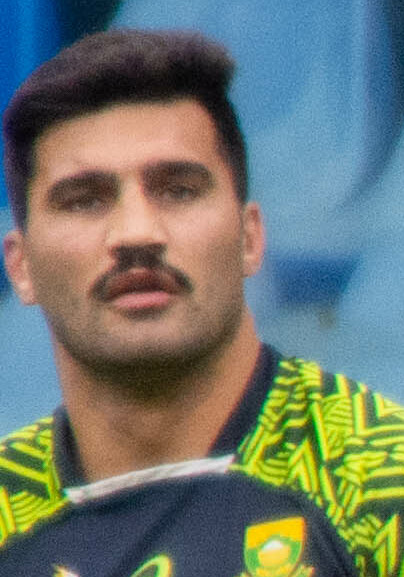
The Lions issued a measured public statement backing their player and signalling that they would "take the appropriate next steps." Buhrs read that as a clear hint that an appeal is on the table, though he warned listeners that more detail would only emerge over the coming weeks.
The Ntlabakanye case lands at a sensitive moment for the sport. World Rugby this week described the Georgia national team's parallel doping scandal — six players collectively banned for 35 years — as "sport's biggest doping scandal ever." Buhrs was careful to draw a line between the two. Where the Georgian case involved multiple players, a team doctor and a team captain, Ntlabakanye's situation is "an individual situation, not a systematic team issue."
"I do think these players need to take responsibility for what they're putting into their bodies," Buhrs said, "but the professionals that are signing these things off also need to take some responsibility for what their patients are putting into their body."
For Ntlabakanye, that is a question for the appeal. For South African rugby, the immediate impact is a Lions prop missing the biggest URC weekend of his club's history and a Springbok front-row contender frozen out of a World Cup he was, until 13 May, very much in line to play in.