Sarah Hunter, England's most-capped backrower and now an attacking-systems coach inside the Red Roses staff, has gone on the record about the coaching reality the public rarely sees — returning to a home Rugby World Cup with a seven-month-old daughter at home and becoming the first English woman in rugby history to win the trophy as both player and coach.
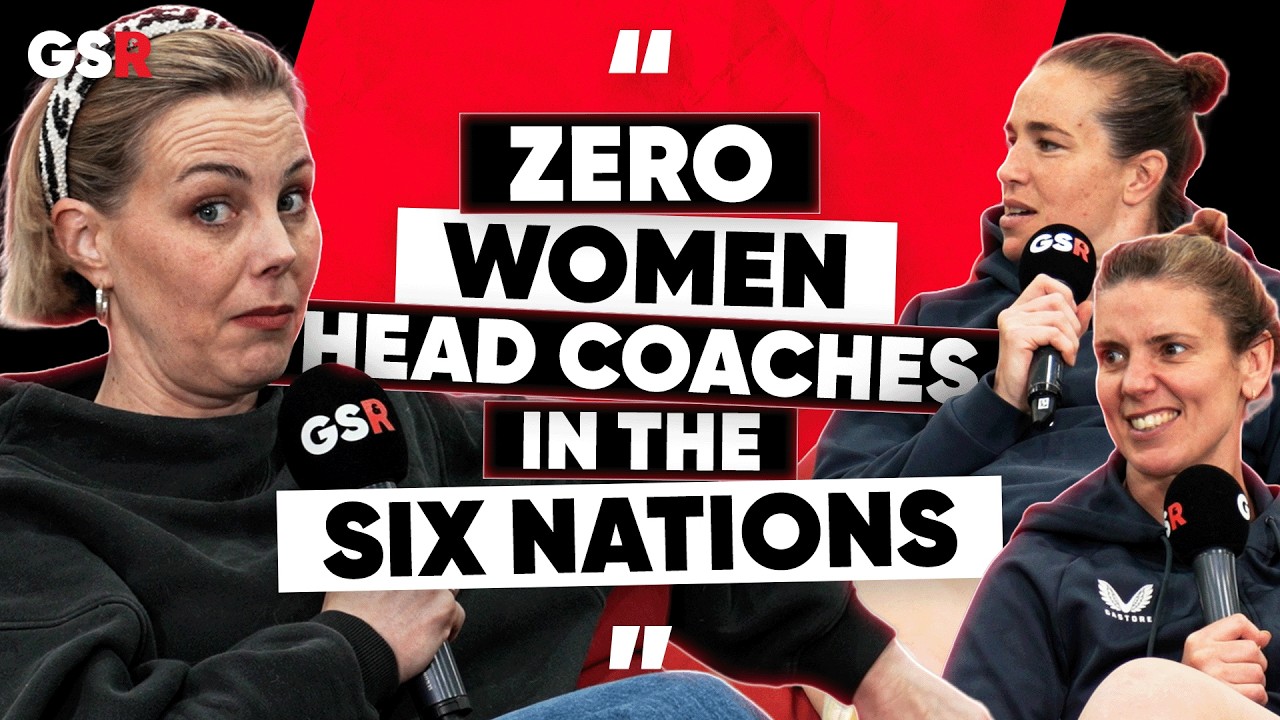
Speaking on The Good, The Scaz & The Rugby alongside fellow Red Roses staff member Emily Scarratt, Hunter walked back through a decade that, by any measure, would qualify as career-defining for any one of its chapters: a 2014 World Cup as a player, the captaincy across the 2017 and 2022 World Cup finals, retirement as England's most-capped player, the transition into coaching, the birth of her daughter Olivia — and a 2025 home World Cup win.
"You're the first woman in English rugby history to win a World Cup as both player and coach — 2014 and 2025," the host put to her. "That's such a flex."

Hunter's response was characteristically straight-bat. "Sorry, what? I didn't know — yeah, someone, I can't remember who, told me, but they were like, 'Yeah, that's never.'" The understatement, Scarratt teased, was very on-brand. The reality of how it happened was less straightforward.
The piece of the story that surprised the panel most was the timing. Olivia was just seven months old when Hunter returned to camp.
"I was pretty passionate about coming back after having Olivia," Hunter said. "And Tim and I worked it as, I guess, reasonably well — that she was kind of seven months old. So she wasn't a little baby baby. So I guess could still — she is very little. It's — she is very little. But… people with seven-month-olds out there are going, 'Sorry, what?'"
The athlete-brain framing of the comeback, Hunter admitted, was the part she now reviews more cautiously. The default mental model of "miss one tournament and I'll be back for the next one" — the one she had relied on through every injury setback as a player — does not translate cleanly to early parenthood and a home World Cup cycle.
"It was a bit of — I look back now and I think it's one of those things. As an athlete you go, 'Well, I had the mentality, oh my baby, I'll miss one tournament and I'll be back for the next one,'" Hunter said. "You know that athlete mentality of being injured? Like, oh well, what am I going to do — when can I be back?"
The pressure of the home World Cup cycle, in retrospect, was something Hunter says she did not appreciate the scale of until she was inside it. By the autumn of 2025, with the tournament closing in, the toll was real.
"I got to, I guess, October and I was like, what's just happened?" she said. "There were some tough moments that I guess Scazzy and Mo were there in camp to look after me and get me through. And I've got obviously Nathan's incredible to support me through that journey. My mom and dad and all the work they did to help support. And Nathan's — I mean, as they say, it takes a village to help you. And it certainly did to be able to, I guess, selfishly come back into a coaching job."
Scarratt — England's most-capped centre and another long-serving figure inside the same staff — pushed back on the word "selfish."

"Coaching is the least selfish job there is," she said. "I was about to say I don't think you is not a selfish person."
Hunter accepted the correction. "I don't know if selfish is the word I would use when you are coaching."
What the staff and the wider Red Roses environment have produced, in turn, is a workplace where having Olivia in camp during the Wales week of the latest Six Nations was, in Hunter's telling, normal — and joyful. "She's now 18 months old. I'm like, how? She's like a proper little human. And she was in camp for the whole of the Wales week." Olivia, Hunter noted, has an England kit that she wore proudly through the camp, and her vocabulary now includes the word "rose" — alongside "mama" and "dada."
The wider context, the panel agreed, is that Hunter's path is the kind of practical case study future generations of women's rugby coaches will refer to. The pre-game and post-baby returns have happened in elite environments before, but rarely with the home-tournament pressure cooker she walked back into. The fact that the Red Roses staff structurally accommodated it — and that England won the World Cup at the end of it — is not a coincidence the women's game can afford to ignore.
The Six Nations head-coach question, which has produced no women in any of the six current top jobs, was teed up later in the same conversation. Hunter declined to be drawn on her own future ambitions, but the message between the lines was that the next generation of women's coaches now has at least one full template for how the role is done — and that the support around it, not the individual willpower, is what makes the difference.
In Hunter's own words: a village. The kind every elite female coach of her generation has needed to invent, sometimes after the fact.