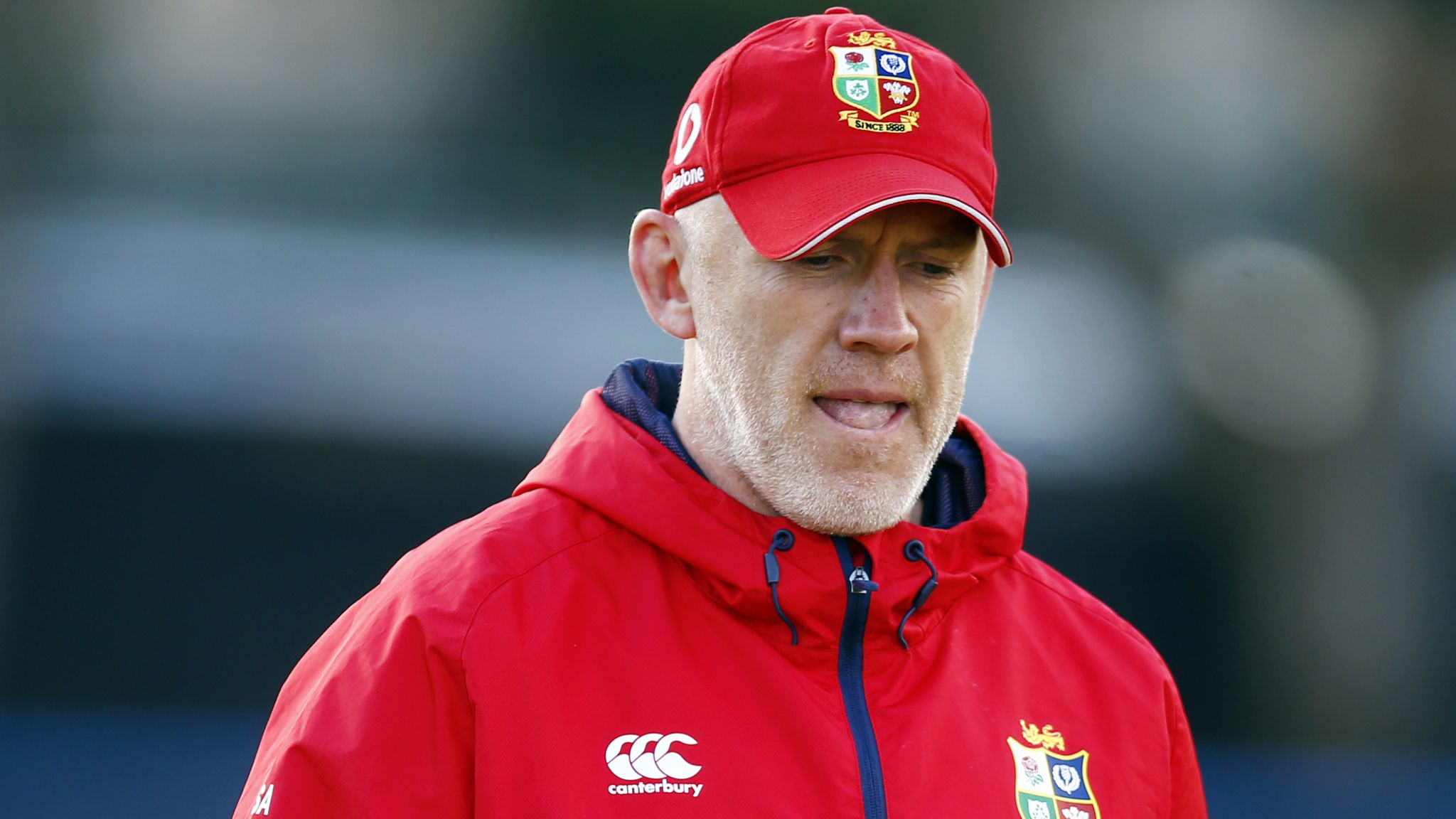
Sir John Kirwan has called time on Super Rugby. The All Blacks World Cup winner and 1987 great used the debut episode of the new Rivals podcast, released on 19 May 2026, to argue that the competition that built the modern professional game in the southern hemisphere has run its course, and that New Zealand and Australia need the "courage" to scrap it and start again.
"I believe that Super Rugby has been amazing for us for the last 30 years but I think it's over," Kirwan said. "I think we need to redefine it, we need to understand what it is and I believe that we need to get back to tribalism and traditionalism."
The intervention is not entirely new for Kirwan, who has been a long-standing advocate for the revival of provincial rugby. What is fresh is the bluntness with which he is now framing the conversation, against a backdrop of declining crowds in Australia, ongoing financial pressure on New Zealand Rugby's high-performance budget, and the loss of South Africa to the URC.

His plan would essentially Australianise the structure. More provincial sides, more local derbies, and a fairer split of the broadcast revenue.
"If it was me, I would bring in another three [New Zealand] sides and I would say to the Australians, 'why don't you bring back Randwick?' And we play like an NRL," he said. "But also, the other thing that needs to change in rugby is we need to divide up the money differently."
The reference to the NRL is the most provocative line of the conversation. The Australian Rugby League's domestic competition has surged ahead of Super Rugby on every commercial metric over the past decade, and Kirwan's view is that the union code's response cannot be tinkering. It has to be structural.
"It's time for change, it's time to have courage and I think tribalism and traditionalism is what great sport nations go on," he said. "We need to take a real good look at rugby."
The parallel he kept coming back to was 1995, the year the southern hemisphere unions did exactly what he is now demanding. The decision to go professional, agreed within months of the World Cup final, redrew the global game and made Super Rugby possible. Kirwan believes the moment for a similar leap has arrived again.
"We had courage to go professional 30 years ago and we need to have courage now," he said.
The data, he argued, is plain. In Europe, the Top 14 in France and the Gallagher Premiership in England are filling stadiums and pulling investment. In the southern hemisphere, the same competition stretched across 12 time zones is losing ground.
"In the northern hemisphere, I think France is going great, I believe the English game is really buoyant with big crowds," Kirwan said. "In the southern hemisphere we're getting smaller crowds and I just think we need to have courage to make some change."

For New Zealand Rugby, the timing of the intervention is awkward. Chief executive Mark Robinson and his board have just signed off on the 2027 Super Rugby Pacific season structure and recently locked in the 2026-27 URC fixture list with European partners. Rugby Australia, simultaneously fighting a $30 million Federal Court action brought by the Melbourne Rebels, is in no position to embark on a wholesale restructure.
But Kirwan's framing — that doing nothing is itself a choice with consequences — is the one that will land hardest in boardrooms. Provincial loyalists in Otago, Taranaki, Hawke's Bay and Manawatu will hear his words as overdue validation. Super Rugby's defenders will counter that the competition's problems are largely financial rather than structural, and that the brand still carries weight in TV markets where rugby has to compete with codes that simply do not exist.
What is clear, on the podcast Kirwan launched on Tuesday, is that one of the southern hemisphere's most decorated voices is no longer prepared to defend the status quo. The All Blacks great has thrown down the marker. Whether either NZR or Rugby Australia has the appetite to pick it up is now the question.