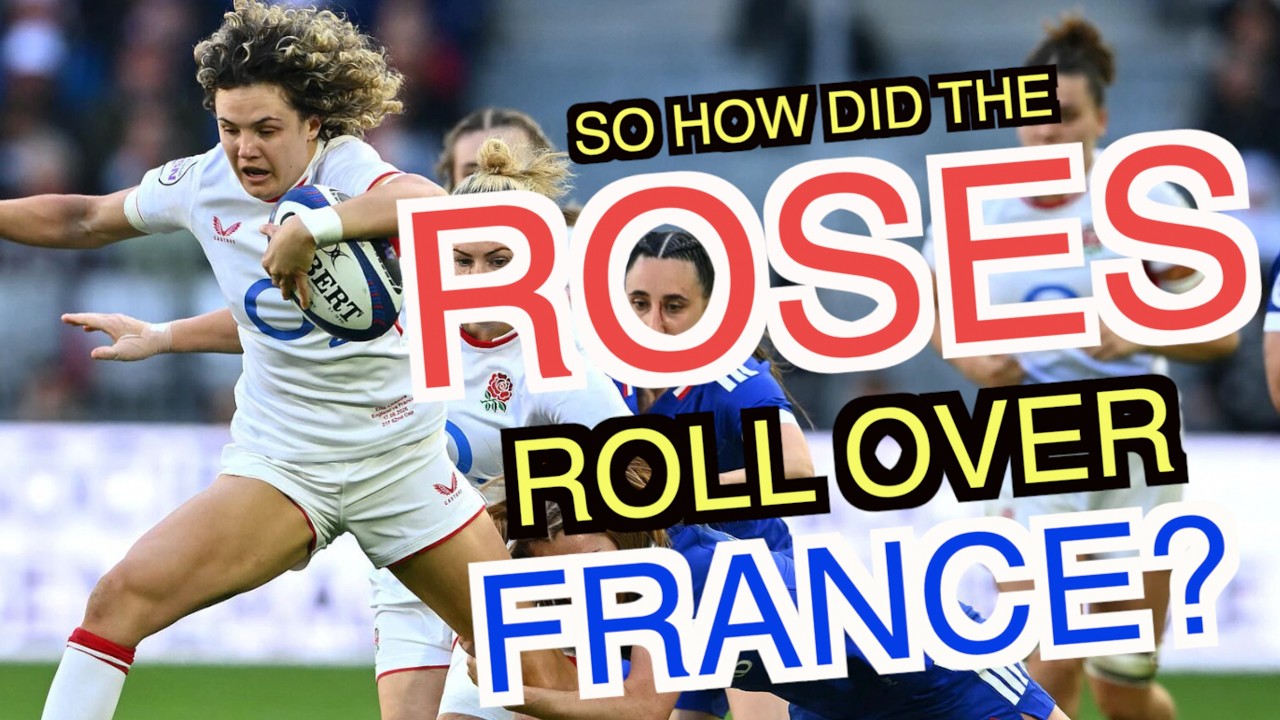
England's Red Roses lifted a fifth consecutive Women's Six Nations Grand Slam after a 62-24 demolition of France in Bordeaux — but according to Squidge Rugby, the headline scoreline hides a contest that was, for once, genuinely on the edge.
In a 27-minute video published on 21 May 2026, hosts Robbie Owen and Jamie Lyall called this England's most impressive performance of their five-year unbeaten run in the tournament. "This is probably the best opposition they've come up against because France are looking better than ever before," the analysis opened. The argument was that France's defensive line speed and physicality through the opening 17 minutes pushed the Red Roses backwards repeatedly, before a single moment of second-row trickery turned the match.
That moment came in the 22nd minute. France held a 7-0 lead and were preparing to win a lineout deep in English territory. Squidge slowed the footage down to point out what Delaney Burns did inside the contest. "As the jumper is about to hit their apex, Delaney Burns goes in here and very, very subtly hits the lifter," they said. "Suddenly the hand slips off and they can't get them to the full height — and the ball just touches the fingertips and brushes past them, lands in English hands."

The hosts described it as an "ittoesque moment" — a nod to Springbok lock Eben Etzebeth's brand of legal-if-the-referee-doesn't-see-it nuisance work. "That is genius levels of second row," they argued. "If you're playing second row and you're not cheating, you're not doing enough."
The knock-on was decisive. England recovered the loose ball, swept it 60 metres downfield through their forwards, and Sarah Bern crashed over for the equaliser. The pod were unequivocal: in the alternate timeline, France maul over for a 14-0 lead and "that's a different game."
The rest of the breakdown turned to Zoe Harrison and the wider attacking shape under attack coach Lou Meadows and head coach John Mitchell. Squidge argued that competition with Holly Aitchison has forced Harrison into a more controlled game-manager role. "The most important reason thing for her, the reason why she's played so well in the Six Nations, is because that pressure has been taken off her, because she doesn't have to be the one who kicks the ball all the time," they said, pointing to the depth of accurate kickers across the Red Roses backline.
Meg Jones earned particular praise for the touch she put on a loose ball to set up Ellie Kildunn's try — slowing down, dropping her foot, and chipping a pass on for the quicker player. "She's not looking for herself to chase. She puts in the kick to put it towards Kildunn," Squidge said. "I've very rarely seen this happen. A player slowing down and setting up their teammate in this kind of situation."

The pod were equally complimentary about Mitchell's defensive plan against France scrum-half Pauline Bourdon Sansus. "They knew the task at hand here. Bourdon Sansus picked up two tries and yet you saw literally from the first minute of the game, literally 40 seconds in, how hard England were going at them," they said. Several deliberate offside penalties early on were read as a calculated trade — line speed in exchange for territory — designed to plant a seed in Bourdon Sansus's head that "it's going to be a long day."
The hosts argued France's decision to bring Bourdon Sansus off in the 63rd minute, with their tails still up, was "insane." And yet the conclusion was that the Red Roses remain at arm's length even as the rest of the world improves. "This Red Roses team remain the most dominant and one of the most impressive teams in rugby history," Squidge said. "And other teams continue to get better — yet it doesn't really matter, because the Red Roses are getting better and better all the time."