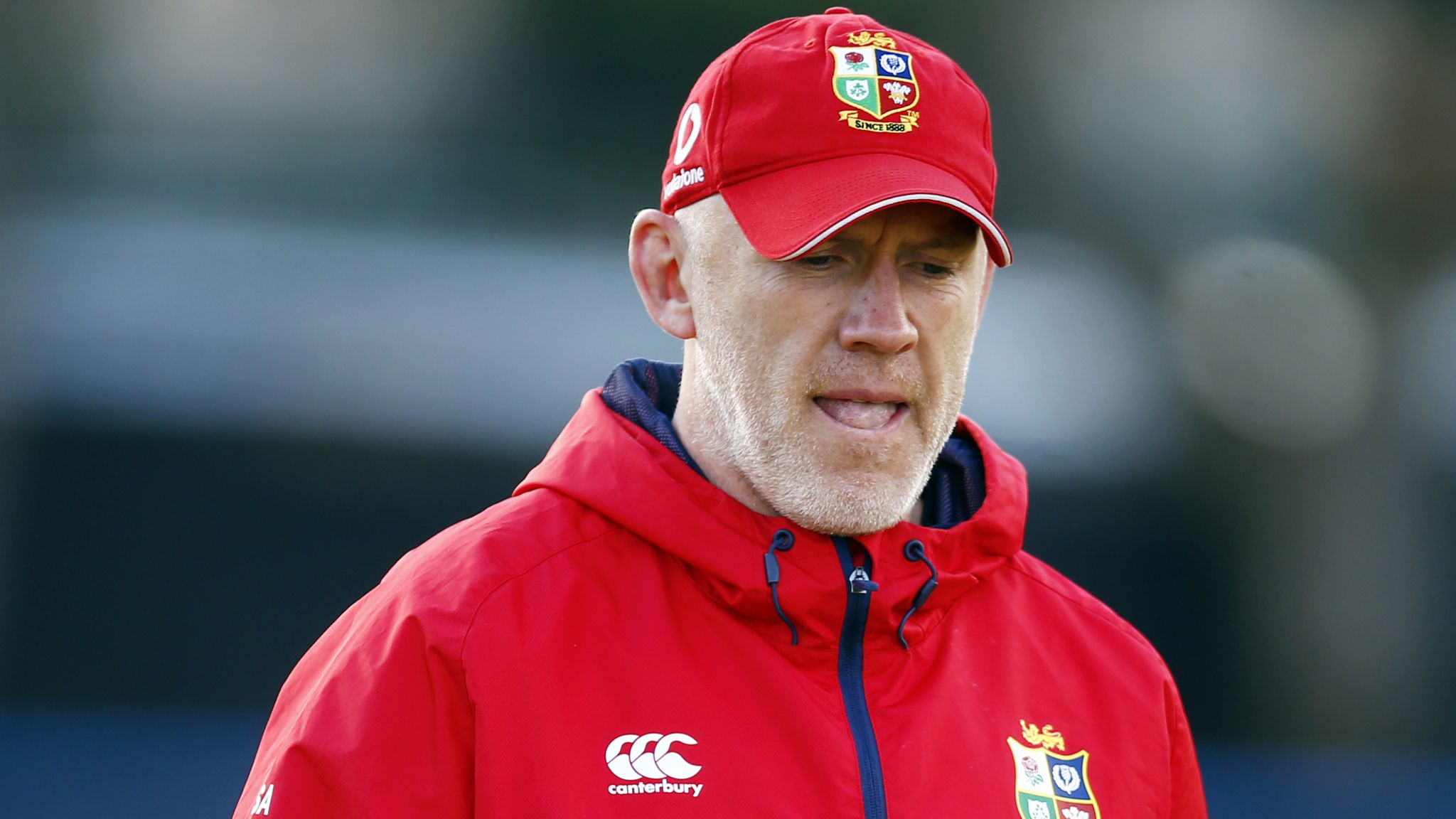
By the URC's own metrics, the DHL Stormers currently boast the competition's most effective forward pack — top of the table for maul defence, mauling, scrum and lineout. On Megafoon Rugby's Lekker Rugby Pod, the two men most responsible explained why.
Forwards coach Rito Hlungwani, a former quantity surveyor from Giyani in South Africa's Limpopo province, was joined by flanker Ben-Jason Dixon — an industrial engineering graduate. The pairing on its own tells you something about the Stormers' approach.
"I always tell the guys that I never come up with the lineout calls or anything like that," Hlungwani said. "But my interest is to see where your fingers are when you're lifting. Where your toes are pointing. How can we get that extra 0.5 per cent to make sure that we've got an effective lineout. Where is your weight when you're mauling? Where are you placing your studs?"

It is the language of a quantity surveyor applied to a forward pack. Hlungwani credited a lecturer at the Cape Peninsula University of Technology who once put a photo of a building on the screen and challenged him to see the skeleton. "By the time you're done with your degree, I want you to see the skeleton in the building," Hlungwani recalled. "That stuck with me. When you look at a house now, in my mind, I'm thinking how many bricks it would have taken to put that together. That same philosophy — attention to detail, looking at every single small detail — has really helped me in my coaching."
Dixon — by his own admission, an engineer who tries to over-think everything — embraces the system. He is best known for his work-rate and his appetite for dominant tackles, both of which he traced back to a primary-school memory. "There was this big guy, Yuan, and he would just run and people would be quite scared to tackle him," Dixon said. "I was like, OK, I'm just going to dive in. And it went OK. I actually made nice contact and I got over that fear."
The maul, which the Stormers have weaponised to lead the URC, is Dixon's favourite subject. "It's a feeling. Like you say, it's like a machine of death," he said. "It's connected parts, it's an organism. We want to go forward, but it's a lot of fun. And then you hear the ref say all right and you're almost hoping for those blessed words because now you know the defence is really in trouble."
What the lineout columns and dominant-tackle counts cannot capture is the Stormers' pre-match ritual. Hlungwani described his forwards meetings before every game as built around silence — minutes of it, before any tactical conversation begins. "No one says keep quiet," Hlungwani said. "It's just a feeling that everyone gets that, OK, business is about to start now. We're about to go to war. I get there and I sit and then there's that loud, loud silence. Sometimes almost unbearable. And I think each person now gets an opportunity to really think about why they play the game."

On occasion, that silence is broken by something more raw. Hlungwani solicits letters from his players' parents, and reads them aloud — in the language the parents use to communicate with their sons. "If I phone Andre Smith's dad, I have to speak to him in Afrikaans," Hlungwani said. "If I phone Sazi's mom, I have to speak in Xhosa to show, you know, just a little bit of that respect. I'll be sitting in that circle. After that silence, I'll be reading a two-page Afrikaans letter or two-page Xhosa."
Dixon is open about the spiritual underpinning of his own approach. Asked where his humility came from, the Springbok flanker quoted scripture: "The idea of doing good in secret is from the Bible. It's from Matthew 6, where Jesus says don't let your right hand know what your left hand is doing."
The interview turned harder when host Harry Jones asked about the recent passing of Stormers team manager Norman 'Chippy' Solomons. Hlungwani, his voice slowing, described the week before the Connacht game as the toughest of his coaching life. "I was sitting in the box before that Connacht game and I was feeling a high level of guilt inside," he said. "How can we be letting the boys go play when I'm in this condition? I think the boys could be in a worse condition. I was feeling like, geez, we should not have let the boys play, because I know how much pain I was dealing with at the time."
Hlungwani returned the conversation to where the entire interview started: preparation. With the Stormers heading on a two-week tour to Belfast and Cardiff to close out the URC regular season, his message to his pack is, in essence, a continuation of the same discipline. "That's the one thing we're in control of right now. Preparation. How can we get better? Prepare for the worst-case scenario. When you do a lineout at training, the standards must be so good because you're expecting to do it against the best contesting team in the world."