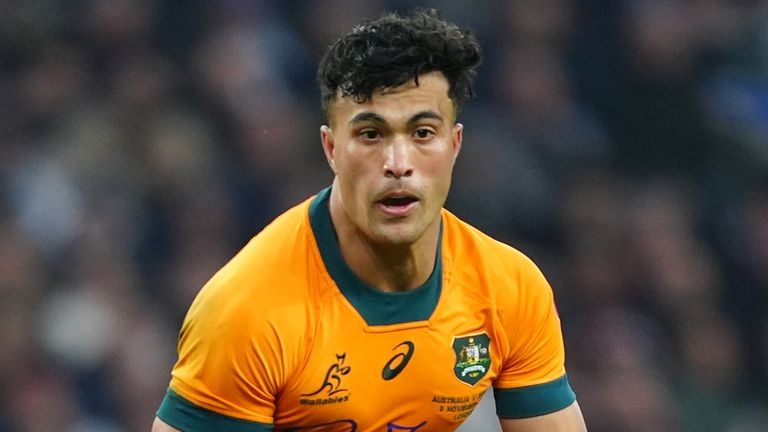
The NSW Waratahs walked into Suva on Saturday with their Super Rugby Pacific season hanging by a thread and walked out 50-something points to the good, with Wildkard's post-match review framing the win not as a miracle but as the side finally doing what it should have been doing for the previous seven rounds.
The big tactical shift, according to Wildkard, was that the Waratahs binned the percentage-rugby template that had defined their season. "The biggest problem with Waratahs I felt throughout the season is the methodical drilling of the same moves again and again," he said. "They've taken the spreadsheet and thrown it away this game, which I am so so so happy to see."
That looser, more spontaneous attacking shape was paired with set-piece smarts. Wildkard singled out a recurring dummy maul into Harry Potter crashing through the ten channel, later replicated through Tristan Riley, as evidence the coaches had identified Drua ten Isaiah Armstrong-Ravula as a defensive soft spot and built plays to attack him. "The thought that went into it is something that I was really happy about," Wildkard said.

Number nine Teddy Wilson, starting ahead of Jake Gordon, came in for particular praise. Wildkard argued Wilson had been given licence to play heads-up rugby for the first time in a while, mixing box-kicks with snipes through the fringes. "Presenting yourself as a threat keeps the defence honest. They can't just set up for the box kick already — they have to stay tight to make sure that you don't just take a ball and run."
The Waratahs piled up a 36-7 lead by halftime, before the Drua, to their credit, won the second half on the scoreboard and clawed back territory through the wet finish in Suva. Wildkard refused to write the Drua's effort off, blaming a flat first-half showing on the unique pressures around their season: head coach Mick Byrne's looming departure, a week's bye disrupting rhythm, and the realisation that the top six was already out of reach. "There's a disconnect in terms of the long-term goals," Wildkard explained. "It's towards the end of the season — you can't really make the top six anymore — and then you had a week off."
The defining moment of that disconnect, Wildkard argued, was wing Isaac Kelly Rambuka being yellow-carded for slapping the ball backwards out of Teddy Wilson's hands after a clean break. "He did not have to do that. His players were there to get the turnover. That was a turnover. That was great defence from his part. But because he didn't trust his teammates or he wasn't communicating with his teammates, he felt like he needed to do that."
A heavy chunk of Wildkard's review, predictably, was reserved for the officiating. The pundit accused Super Rugby of "manufacturing excitement with the referees," pointing to a Drua try that was repeatedly reviewed before being chalked off for a phantom knock-on, and a Waratahs reserve prop's score that he felt had not been properly grounded but was waved away in a single, fleeting replay. "How clear and obvious do you need to make a decision?" he asked. "It's like they're deliberately wasting people's time to rile people up because we complained about the referees last week."
There were stat-sheet concerns too — 31 missed tackles for the Tahs, 16 turnovers conceded by the Drua — and a curious scrum penalty against the visitors for "boring in" that Wildkard felt was harshly given on their own feed. But the headline numbers were the only ones that mattered: five tries to eight, with the Waratahs' set-piece, kicking variety and defensive aggression all firing in the same game for the first time in months.
It keeps Sydney's faint finals hopes alive at 21 competition points, with the Reds on 27 and just two rounds left. The Tahs need someone to knock the Reds over and a couple of their own results to fall right. After Saturday in Suva, though, the door has not quite shut.