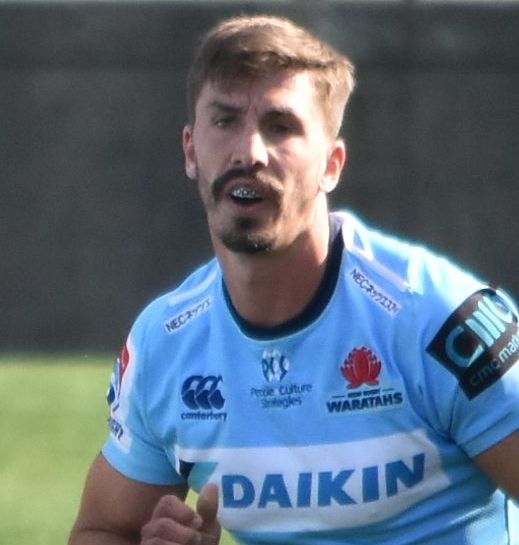
The Wallabies' build-up to the 2026 Test season has been jolted by a serious injury to Waratahs scrum-half Jake Gordon, who is feared to have ruptured an Achilles tendon during his side's Super Rugby Pacific defeat. The blow could not have come at a more sensitive time for Joe Schmidt, who must now reassess his options at No. 9 just as the international window looms.
Gordon, one of Australia's most experienced and reliable halfbacks, was reportedly hurt taking off from one of the quick taps that have long been a hallmark of his game. If the rupture is confirmed, it would almost certainly rule him out for an extended period and remove a senior leader from Schmidt's spine at a crucial juncture.
The injury leaves Australia worryingly light on capped scrum-halves. With Gordon sidelined, the national pool of proven options narrows sharply, forcing Schmidt to lean on a mix of experience and untried talent to fill the void.

The most obvious contender to step up is Tate McDermott, the livewire Brumbies and former Reds No. 9 whose energy off the bench has often been deployed as an impact weapon rather than a starting role. His running threat makes him a natural candidate to inherit greater responsibility, even if his game has frequently been used in short, sharp bursts.
Brumbies stalwart Ryan Lonergan also enters the conversation as a steady, game-managing option, though questions have lingered over whether he has fully won Schmidt's trust at Test level. Beyond that, the selection picture becomes thinner still: Kalani Thomas, with just one cap to his name, represents the most capped of the next tier, while younger prospects such as Teddy Wilson, Louis Werchon and Nathan Hastie hover on the fringes as potential bolters.
That lack of depth is the real concern for Australian rugby. A halfback is the conductor of a team's tempo and decision-making, and losing a player of Gordon's experience exposes how reliant the Wallabies have become on a small group of trusted operators. Schmidt, renowned for his attention to detail and his ability to extract performances from limited resources, now faces the task of fast-tracking a replacement combination before the Tests arrive.
There is opportunity in the setback, too. A vacancy at scrum-half hands a younger player the chance to stake an early claim and grow into the role across the season. But it is a gamble Schmidt would surely rather not have been forced into. For now, the Wallabies must wait on the results of Gordon's scans, hoping the prognosis is not as grim as feared — while quietly bracing for the possibility that one of their most dependable figures will be watching the Test campaign from the sidelines.